

Repiping a single-family house is straightforward: the pipes are yours, the walls are yours, and the decision is yours. Repiping a condo or townhouse is a different animal. You share walls, you share plumbing lines, and you answer to an association that may have a say in what you can cut into and when.
Before you tear into a wall, you need to know two things: which pipes you are actually allowed to touch, and whether your HOA’s approval is required first. Getting either wrong can mean fines, a stop-work order, or a legal dispute. Here is what makes condo repiping different and how to do it right.
The Core Difference: You Do Not Own All the Pipes
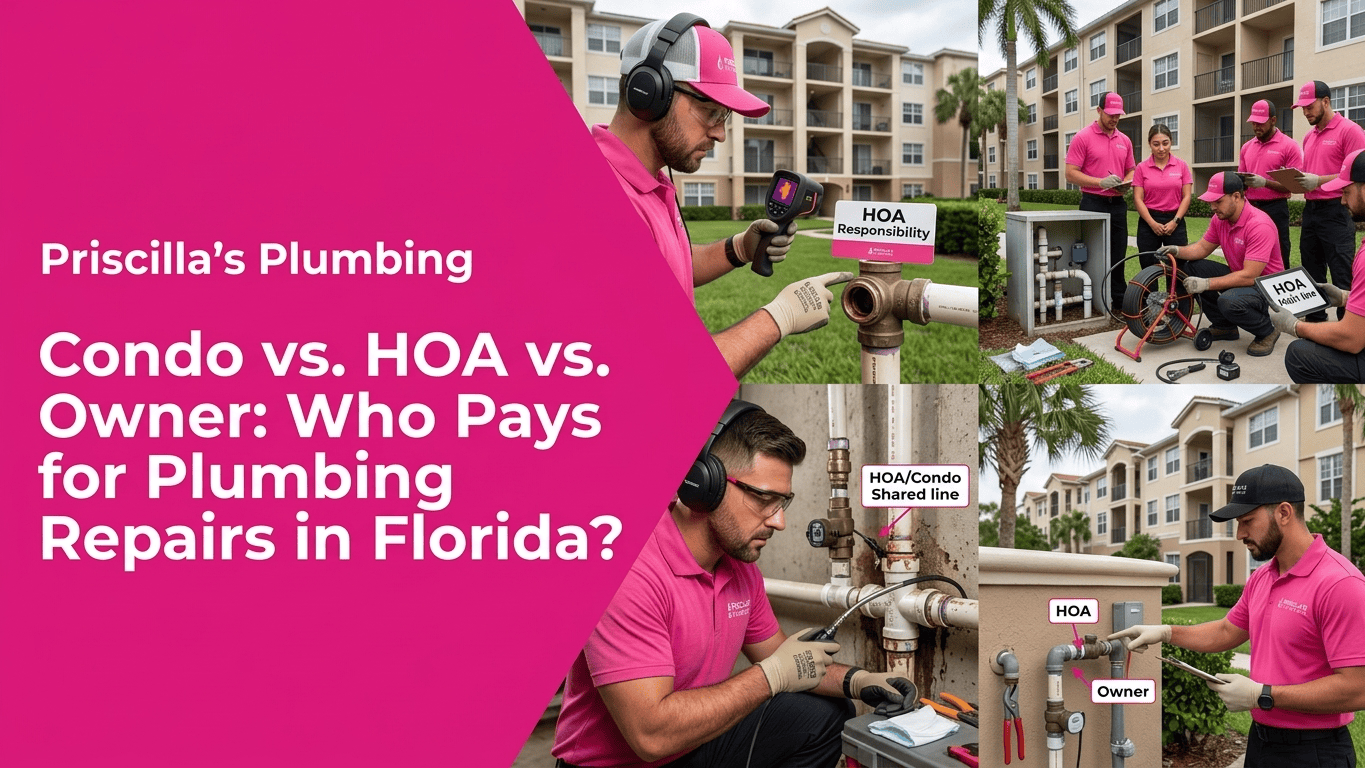
In a house, every pipe inside the property line is yours. In a condo, the plumbing is divided between what you own and what the association owns, and that line is drawn by your governing documents, not by where the pipe happens to run.
In Florida, condominium associations are responsible for common elements, while individual owners are responsible for what is inside their unit boundaries. The catch is that the declaration of condominium, your building’s governing document, defines exactly where the unit ends and the common element begins. Two buildings on the same street can draw that line differently.
Generally:
- Pipes serving only your unit, branching off to your sinks, tub, and toilet, are usually the owner’s responsibility.
- Vertical stacks and main lines serving multiple units are usually common elements that the association maintains.
- Limited common elements are a gray middle category, shared systems that the declaration may assign to specific owners.
The only reliable way to know which is which in your building is to read the declaration, and when it is ambiguous, ask the association or an attorney before you cut.
Why This Matters Before You Start
Skipping this step is the most expensive mistake a condo owner can make on a repipe.
If your plumbing connects to vertical stacks that serve other units, or runs through structural or shared walls, the association very likely considers those common elements that require board approval before any work. Cutting into them without approval can trigger:
- Fines from the association
- A stop-work order halting your project mid-job
- Liability if your work damages a shared system or a neighbor’s unit
- A legal dispute under your building’s governing documents
The few hours it takes to confirm responsibility and get approval are nothing next to the cost of getting it wrong.
Do You Need HOA Approval to Repipe?
Not always, but often. It depends on the scope of the work and how your documents define the boundaries.
You most likely need board approval when:
- The repipe touches vertical stacks or main lines shared with other units
- Work requires opening structural or shared walls
- The project affects building systems beyond your unit
- Your declaration or bylaws specifically require approval for plumbing alterations
You may not need approval when:
- The work is confined entirely to lines that serve only your unit
- You are not opening shared or structural walls
- Your governing documents do not require it for in-unit alterations
When in doubt, assume approval is required and confirm in writing. An informal “go-ahead” from a board member is not the same as documented approval, and it will not protect you in a dispute.
What Makes a Condo Repipe Physically Different
Beyond the rules, the plumbing itself is more complex than in a standalone house.
Stacked and multi-floor piping
In a multi-story condo building, units stack vertically and share riser pipes. Repiping one unit can mean coordinating access to the unit above or below, since the lines run between floors. This is rarely something you can solve alone; the building and sometimes neighbors have to be part of the plan.
Shared walls
Many of your walls are party walls shared with a neighbor or with a common corridor. A plumber cannot cut freely into them the way they would in a detached house, both for HOA reasons and structural ones.
Limited access and water shut-off
Shutting off water for your repipe may affect a shared supply, which means coordinating timing with the building or other units. There is less flexibility than in a house where you control the main valve.
Restoration to community standards
After the work, drywall and finish repairs in shared or visible areas may need to meet community standards, and exterior or common-area surfaces are the association’s domain, not yours to alter freely.
The Insurance and Responsibility Layer
Condo plumbing failures raise a question houses never do: whose insurance pays? If a pipe the association maintains fails and damages your unit, responsibility may sit with the association. If a pipe you own fails and damages a neighbor below, it may sit with you.
This is exactly why pinning down which pipes you own matters before a repipe. It defines:
- Who is liable if something goes wrong during the work
- Whose insurance is involved
- Whether the association should fund part of the project for shared lines
In older Florida condo buildings with aging polybutylene, galvanized, or cast iron lines, these questions come up constantly, and the answer always traces back to the declaration.
A Practical Step-by-Step for Condo Owners
- Read your declaration of condominium and bylaws. Find how they define unit boundaries, common elements, and limited common elements.
- Identify which pipes you actually own. Map your in-unit lines versus shared stacks and mains.
- Submit a written approval request to the board if any work touches shared elements or structural walls. Get the approval in writing.
- Hire a licensed plumber experienced with condos, not just houses. Multi-unit coordination is its own skill.
- Confirm permits. A repipe needs a permit and municipal inspection regardless of building type.
- Coordinate water shut-off and access with the building and affected neighbors.
- Restore to standard. Make sure drywall and finish work meet both code and community requirements.
Why the Right Plumber Matters More in a Condo
A plumber who only does single-family homes can walk you into an HOA violation without realizing it. Condo and townhouse repipes require someone who understands shared lines, coordinates access across units, works within association rules, and handles the permit and inspection properly. Priscilla’s Plumbing handles repipe projects for condos, townhouses, and houses across Oakland Park, Fort Lauderdale, and the surrounding Broward area, and works within your building’s requirements from the first assessment.
FAQ
Do I need HOA approval to repipe my condo?
Often yes, especially if work touches shared stacks or structural walls. Confirm with your declaration first.
Who is responsible for pipes in a Florida condo?
The association maintains common elements; owners maintain in-unit lines. Your declaration defines the exact boundary.
What are the common elements in a condo?
Shared building systems like vertical stacks and main lines that serve multiple units are maintained by the association.
Can the HOA stop my repipe project?
Yes. Unauthorized work on shared elements can trigger fines or a stop-work order, so get written approval.
Is repiping a condo more expensive than repiping a house?
It can be, due to shared-line coordination, access challenges, and stricter restoration standards.
Does a condo repipe still need a permit?
Yes. A permit and municipal inspection are required regardless of whether it is a condo or a house.
Whose insurance covers a condo pipe failure?
It depends on whether the failed pipe is a common element or owner-owned, which your declaration determines.