
If you have a sprinkler system in your yard, there is a good chance you already require one small device that most homeowners never think about: a backflow preventer. Many people find out their irrigation backflow preventer in Florida is missing or has failed, only after a plumber or an inspector points it out. By then, it can mean a fine, a notice, or a plumbing job you were not expecting.
Here is a simple answer to the question: do you actually need one, why it matters more than it sounds like it should, and what it takes to get it done right.
What Is an Irrigation Backflow Preventer?
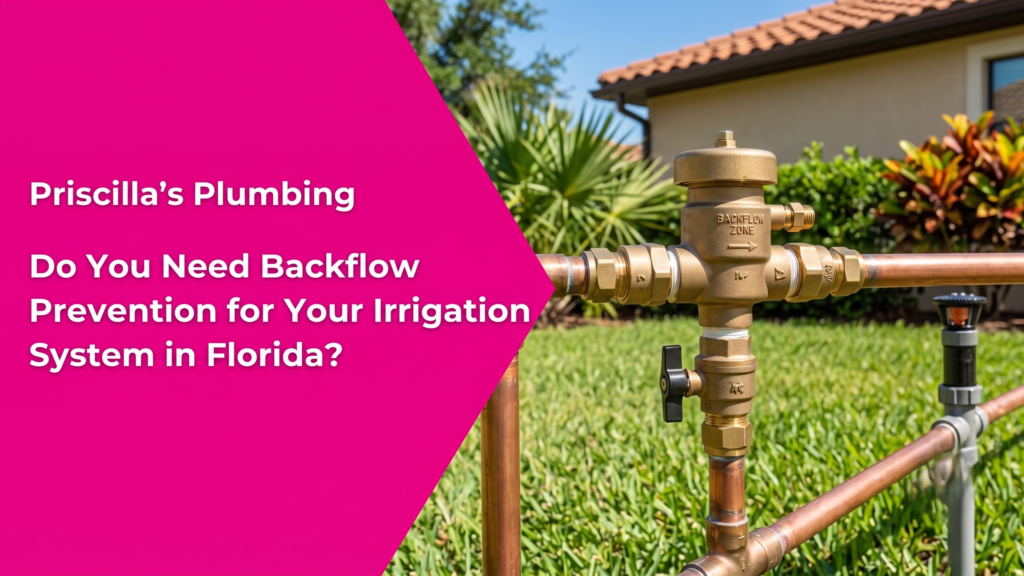
An irrigation backflow preventer is a small device installed where your sprinkler system connects to your main water line. Its only job is to make sure water only flows one direction, from your clean water supply out to your lawn, never backward into your home’s drinking water.
It sounds simple, but that one-way rule is protecting something important.
Why Sprinkler Systems Need This Protection
Your irrigation system connects directly to the same pipe that brings clean water into your home. Under normal conditions, water flows out to your sprinklers just fine. But if water pressure drops suddenly, like during a water main break or heavy firefighting nearby, water can actually be pulled backward instead of pushed forward.
This backward pull is called a sprinkler cross-connection, and it is the exact situation a backflow preventer is built to stop. Without one, whatever is sitting in your irrigation line- lawn chemicals, dirt, or standing water- can get pulled back into the pipes that supply your drinking water.
The Real Risk Is Fertilizer Contamination
This is not just a technical worry. Most Florida lawns are treated with fertilizer, weed killer, or pest control products at some point. If a backward pull happens while these chemicals are sitting in the irrigation line, there is a real fertilizer contamination risk to the water supply, not just for your home, but potentially for your neighbors on the same water line, too.
This is exactly why cities take this rule seriously. It is not about paperwork. It is about protecting potable water, keeping the water that comes out of your kitchen faucet safe to drink.
Is It Required by Law?
In most of Florida, yes. Local irrigation code requires a backflow preventer on any sprinkler system connected to the public water supply. The exact rule can vary a little by city or county, but the pattern is the same almost everywhere: if your sprinklers connect to the main water line, a backflow preventer is required, and in many areas, it must be tested every year by a certified tester.
Skipping lawn irrigation code is not just a risk to water safety. It can also mean:
- A failed inspection if you sell your home
- Fines from your local water authority
- A required retrofit after the fact, often at a less convenient time than if it had been installed correctly from the start
PVB Is The Common Fix for Sprinkler Systems
For most home irrigation systems, the standard device used is a pressure vacuum breaker, often shortened to PVB. A proper PVB is placed above ground, right where the irrigation line branches off from the main water supply, usually close to where the system starts.
A few things matter for a PVB installation to work correctly:
- It must be installed above ground, not buried, so it can be seen and tested
- It must sit above the highest sprinkler head in the yard, so gravity does not work against it
- It should be checked yearly to confirm the internal parts have not worn out
An improperly installed PVB may look fine but fail to actually stop backward flow when it matters, which defeats the entire purpose of having one.
How Do You Know If You Already Have One?
Many homes already have a backflow preventer installed, especially if the sprinkler system was added by a licensed contractor. Look for a small above-ground device near where your irrigation line starts, often a short pipe with two handles and a rounded top. If you are not sure, or if your system was installed a long time ago or by someone unlicensed, it is worth having a plumber check.
Common signs that your potable water protection is compromised:
- No visible device at all where the irrigation line connects
- A device that looks old, corroded, or damaged
- Water leaking or dripping from the device when sprinklers are off
- A letter from your water utility about a required test or repair
If you spot any of the above signs, call a licensed tester. He checks the device to confirm it truly stops backward flow, not just that it is present. If it fails, it usually needs a repair or a new PVB, then a retest to confirm it passes. This is a normal, routine process, and most homes only need it once a year.
Protect Your Water and Stay Code-Compliant
An irrigation backflow preventer in Florida is small, but it protects something big: the water your whole family drinks. It is also simply required by code in most of Florida, so having it installed correctly, tested on schedule, and in good working order keeps you protected from fines and, more importantly, keeps your water supply safe.
At Priscilla’s Plumbing, we treat your home like our own. Our friendly, licensed plumbing experts specialize in residential backflow installation, testing, and repairs. We make the entire process stress-free with our honest pricing, on-time arrivals, and clean, professional work.
Do not leave your family’s drinking water to chance or risk expensive city fines. Contact Priscilla’s Plumbing now to schedule your backflow check and keep your water pure.
Frequently Asked Questions
1. What does an irrigation backflow preventer do?
It is a safety valve that stops dirty yard water, chemicals, and fertilizers from being sucked backward into your home’s clean drinking water pipes.
2. Is a backflow preventer required by law in Florida?
Yes. State plumbing and irrigation codes require these safety devices on all lawn sprinkler systems to protect the public water supply.
3. How often do I need to test my backflow device?
You must have your backflow tool tested by a certified plumber once every year to make sure the internal parts are working correctly.
4. Can I install a PVB backflow device myself?
No. Professional installation is required because it must be placed at the correct height and tested with special tools to comply with local laws.
5. What happens if my backflow preventer fails?
If it fails during a pressure drop, dirty water mixed with fertilizers and outdoor bacteria can flow into your home’s faucets and make your family sick.