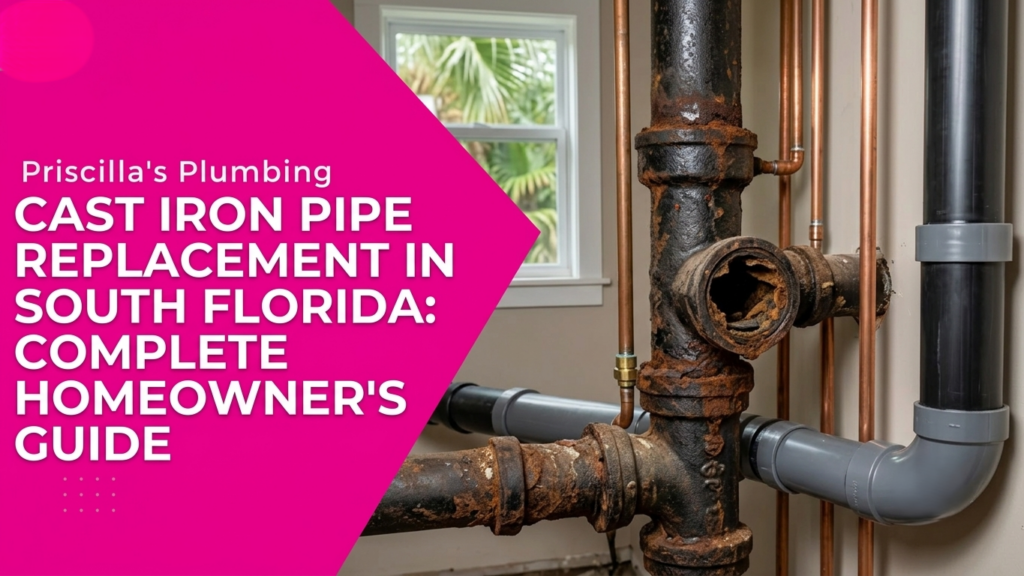
If you own a home built before the mid-1970s, your plumbing is running on borrowed time. Out of sight beneath your floors sits a network of heavy, black cast iron pipes that are slowly reaching the end of their functional lifespan. It is about time to start asking for cast iron pipe replacement in South Florida.
In standalone houses, townhouses, and older neighborhoods, cast iron was once the gold standard for moving wastewater. Today, those same systems are the single biggest liability for local homeowners. When they fail, they don’t just leak; they collapse, causing major property damage.
Let’s break down how to spot a failing system, how we fix it, and what a replacement project actually costs in South Florida.
The Real Problem In Cast Iron Drain Lines
If your property was constructed before 1975, it was almost certainly built using pre-1975 cast iron drain lines. While cast iron is thick and strong, it was never designed to last forever. Most of these lines carry a life expectancy of 40 to 50 years. In South Florida, our high humidity, salty coastal air, and acidic sandy soils accelerate this timeline, causing the metal to rot from the inside out.
As the metal thins, the interior of the pipe changes. It develops a rough, jagged texture called “scaling.” This rough surface catches waste, toilet paper, and grease. What starts as a slow drain eventually turns into a structural failure where the bottom of the pipe completely rusts away, releasing raw sewage directly into the dirt beneath your foundation.
Red Flags Your Cast Iron is Failing
You don’t need to see through your concrete floor to know your drain lines are rotting. Your home will exhibit clear warning signs when the system is near collapse:
- A Recurring Sewer Backup: If you have to call a rooter service to snake your main line every few months just to keep your toilets flushing, you aren’t dealing with a simple clog. The pipe itself is likely broken, cracked, or filled with tree roots that have broken through the weakened metal joints.
- Sewer Smells Inside the Home: A healthy plumbing system seals sewer gases away. If you notice a foul, earthy, or sulfur-like odor in your bathrooms, laundry room, or kitchen, it means sewer gas is escaping through cracks in your drain lines.
- Slow Drains Throughout the House: When a single sink drains slowly, it’s a local clog. When your kitchen sink, master shower, and guest toilet all drain slowly at the exact same time, the main cast iron line under your slab is restricted or failing.
- Mystery Pest Infestations: Persistent issues with sewer roaches or rodents often trace back to a broken under-slab line. Pests use the cracks in the broken cast iron as an open highway from the city sewer main straight into your walls.
The Modern Standard for Scheduling Replacement
When we replace old cast iron, we never use metal again. The modern industry standard for residential drain lines is a full PVC Schedule 40 replacement.
Schedule 40 PVC is a high-strength, thick-walled white plastic pipe. It is completely immune to rust, chemical corrosion, and sewer gases. Because the interior walls of PVC are perfectly smooth, waste moves through smoothly without catching, completely eliminating the scaling and heavy blockages common with old metal systems. A properly installed PVC drain network is rated to last 50 to 100 years.
How Plumbers Replace Pipes Under Concrete
Because South Florida homes are built on flat concrete slabs, accessing buried pipes requires specialized engineering. There are two primary ways to handle a structural replacement:
1. Trenching Through the Floor
This traditional method involves cutting directly through your finished floors, jackhammering channels into the concrete slab, digging out the dirt, and swapping the pipes from above. While effective, it means complete destruction of your tile, wood, or laminate flooring, requiring you to move out of the home during construction.
2. Under-Slab Tunneling
Whenever possible, advanced teams use under-slab tunneling. Technicians dig access pits outside your home’s perimeter foundation wall and physically tunnel horizontally underneath the concrete slab.
This method allows plumbers to remove the failing cast iron and hang the new PVC lines from underneath without touching your interior flooring, cabinets, or drywall. Your family can usually stay inside the house with working water throughout the project.
What Does Cast Iron Replacement in South Florida Cost?
Replacing a main line network is a major construction project. Local pricing varies based on the size of your home, how many bathrooms you have, and how deep the lines are buried. When your lines complete their pipe corrosion lifespan, here is what homeowners should budget: For more precise on Pricing Read Out Blog,
How Much Does Cast Iron Pipe Replacement Cost in South Florida, USA?
| Project Scope | Average Price Range | Material Used |
| Single Bathroom/Kitchen Line | $2,500 – $6,000 | PVC Schedule 40 |
| Under-the-Slab Tunneling (Per Pit/Run) | $3,500 – $7,500 | Excavation Labor |
| Full Home Drain Replacement | $10,000 – $30,000+ | Complete System |
Note: If you choose traditional trenching over tunneling, remember to budget an additional $7,500 to $10,000 for interior flooring and concrete restoration after the plumbing work is finalized.
Upgrade Your Home’s Foundation Today
A failing cast-iron pipe cannot be fixed with chemicals or temporary patches. Every time you clear a recurring backup, you risk a total structural collapse under your slab. You need a permanent, code-compliant cast iron pipe replacement south florida from a team that treats your property with respect.
Priscilla’s Plumbing specializes in certified cast-iron-pipe diagnosis and full PVC replacements across South Florida. We eliminate the guesswork by using advanced sewer camera inspections to show you the exact condition of your lines. We focus on non-invasive tunneling to keep your interior floors beautiful and intact, and we provide upfront, honest pricing with zero hidden fees.
Call (954) 982-6244 for a camera inspection today, and find out exactly what is running beneath your floors before it finds a way to tell you itself.
Frequently Asked Questions
How do I know if my home has cast iron pipes?
If your home was built before 1975 and the drains were never replaced, assume cast iron until a camera inspection confirms the material.
What is the best replacement material for cast iron?
PVC Schedule 40 replacement is the standard choice, offering strong corrosion resistance and a lifespan of 50 years or more.
Do I need to break up my whole floor to replace the pipes?
Not always. Under-slab tunneling lets plumbers reach damaged pipe from below without demolishing the entire slab.
Is a recurring sewer backup always a sign of cast iron failure?
Not always, but a pattern of repeat clogs after cleaning is one of the clearest warning signs of pipe corrosion, and it deserves a camera inspection.
How long does a cast iron pipe replacement project take?
Most residential projects take 2 to 5 days, depending on the length of pipe and how it needs to be accessed.