
Your pool water level drops a little each day. At first, the change seems small. Then you start adding more water than usual. Soon, you may wonder if the Florida heat is causing normal evaporation or if you need pool leak detection for clear answers.
The difference matters. Normal evaporation is expected, especially in South Florida. A pool leak wastes water, raises costs, and may damage pool equipment, plumbing, or the ground around your pool. A simple bucket test helps you compare normal water loss with possible leakage.
The test takes about 24 hours and costs nothing. Once you know what the results mean, you can take the next step with more confidence.
How Much Pool Water Loss Is Normal In a Day?
Every swimming pool loses some water. Heat, sunlight, wind, and low humidity all affect how much water leaves the pool.
The normal evaporation rate in Florida often changes with the weather. Hot and windy days usually cause more water loss than cooler and still days. Pool heaters and water features also increase evaporation.
Still, water loss needs attention when your pool loses more than about 1/4 inch of water per day. This amount often points to a leak instead of normal evaporation.
A quick look at the pool each morning does not always give you a clear answer. For example, you may add water after swimming or after a hot day. Rain also changes the water level.
The bucket test gives you a better way to compare your pool with the water inside the bucket.
What Is the Bucket Test & How To Perform It For Pool Leak Detection
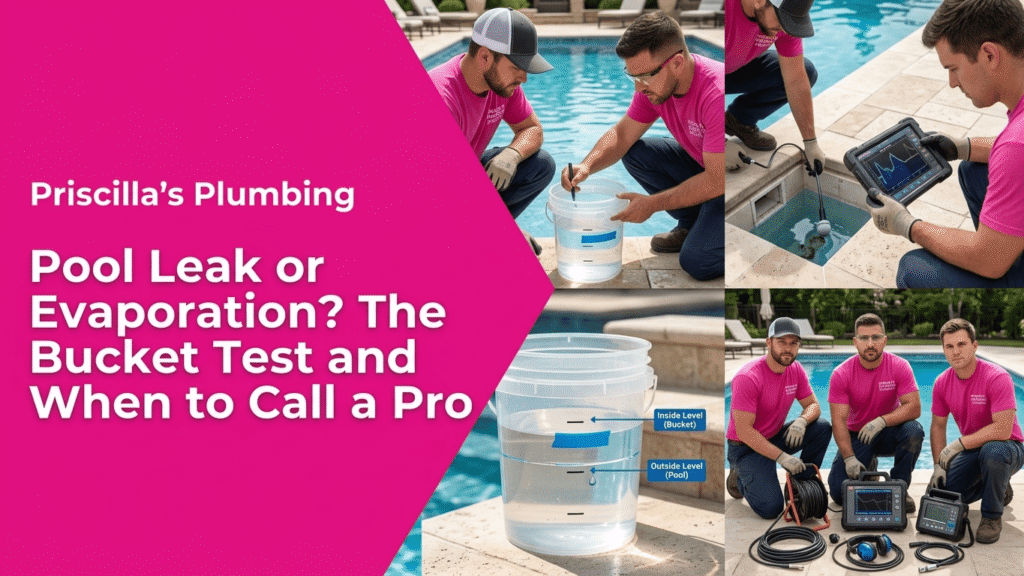
The bucket test is a simple leak detection method. It compares the water loss inside a bucket with the water loss from your pool over the same 24-hour period. Both the pool and the bucket face the same weather. Therefore, both should lose a similar amount of water from evaporation.
If the pool loses much more water than the bucket, the extra water is likely escaping through a leak. The test also helps you look for problems connected to the pool pump, plumbing lines, shell, or fittings.
For better results, run the test carefully and follow these steps in order.
Step 1: Set Up Your Test
Fill a five-gallon bucket with pool water until the level sits about one inch from the top. Place the bucket on the first or second step inside your pool, so the water level inside the bucket matches the water level in your pool. Mark the water line on the inside of the bucket with a permanent marker, then mark the matching level on your pool wall or tile.
Step 2: Run the Test
Turn off any autofill systems, pool heaters, or water features before you start the clock. Wait a full 24 hours, and do not add water or swim during that window. Both numbers need to move under the exact same conditions for the test to mean anything.
Step 3: Compare the Results
After 24 hours, check both marks. If your pool water dropped more than the water inside the bucket, you have a leak somewhere in the system. If both levels dropped by roughly the same amount, your water loss comes from evaporation, and no repair is needed.
Pro Tip: Test the Pump Two Ways
Run the full test twice for a sharper answer. Test once with your pump running, then test again with the pump off. Losing more water while the pump runs points toward a pool plumbing line leak somewhere in your equipment or piping. Losing more water while the pump sits off points toward a shell or fitting leak instead, such as a crack in the pool structure itself.
How to Read Your Bucket Test Results
The results are simple. If the water inside the bucket and the water in the pool drop by about the same amount, evaporation is the likely cause. If the pool water drops much more than the water inside the bucket, your pool likely has a leak.
For example, the bucket loses 1/8 inch of water during 24 hours. Your pool loses 1/2 inch during the same period. The extra loss points to a problem beyond normal evaporation.
This is why tracking pool water loss per day matters. A small difference may not seem serious at first. Yet repeated water loss adds up over days and weeks. Keep a record of your results if the pool continues losing water. This information helps a professional understand the problem.
Common Sources of Pool Leaks
Once the bucket test confirms a leak, the source usually falls into one of a few common categories. A skimmer crack repair often solves the problem when the leak sits at the skimmer housing, a spot that takes constant stress from water movement and ground shifting.
A plumbing line leak, hidden underground between the pool and the equipment pad, causes bigger losses and takes specialized equipment to pinpoint. Structural cracks in the pool shell itself, along with loose fittings or damaged light niches, round out the most common culprits found across South Florida pools.
A leak in your pool rarely stays isolated from the rest of your home either. If you noticed your water bill runs high before you even started the bucket test, you need to take drastic steps immediately.
When to Call a Professional
DIY checks answer the first question, but a licensed technician solves the actual problem. Reach out for professional leak detection when any of these situations apply to you.
- The bucket test confirms water loss beyond the normal evaporation rate
- Water loss speeds up specifically when your pump runs
- You notice wet ground or puddles forming near buried pipes
- You spot visible cracks in the pool shell or shifting deck sections
- Water drains fast enough to threaten your pump, liner, or the soil around your pool
Rapid or unexplained water loss anywhere in your home deserves a closer look, not just in the pool. Most common household water leaks in South Florida show how quickly small leaks turn into costly damage across the rest of your property.
Stop Guessing and Get a Clear Answer on Your Pool
A falling pool water level deserves a clear answer. The bucket test helps separate normal evaporation from unusual water loss. If the pool loses much more water than the bucket, the next step is to call a professional pool leak detection team.
At Priscilla’s Plumbing, we bring real detection technology, honest explanations, and four generations of local know-how to every backyard in South Florida. From the first sign of a dropping water line to a fully confirmed leak, the team finds the source, explains the fix, and protects your pool, your yard, and your water bill in one visit.
Schedule your water leak detection with Priscilla’s Plumbing today and turn a guessing game into a solved problem.
Frequently Asked Questions
How much water loss per day means my pool has a leak?
A loss of more than one quarter inch per day usually points to a real leak rather than normal evaporation, especially outside of peak summer heat.
Can I run the bucket test in winter?
Yes. Cooler weather slows evaporation, so a bucket test run in winter often gives you an even clearer signal if a true leak exists.
Is a skimmer leak expensive to fix?
A skimmer crack repair usually costs far less than a full plumbing line repair, since the fix stays localized to one accessible spot instead of buried piping.
What happens if I ignore a confirmed pool leak?
Ignoring a confirmed leak wastes water every single day, raises your utility bill, and risks soil erosion or structural damage to your pool deck over time.