
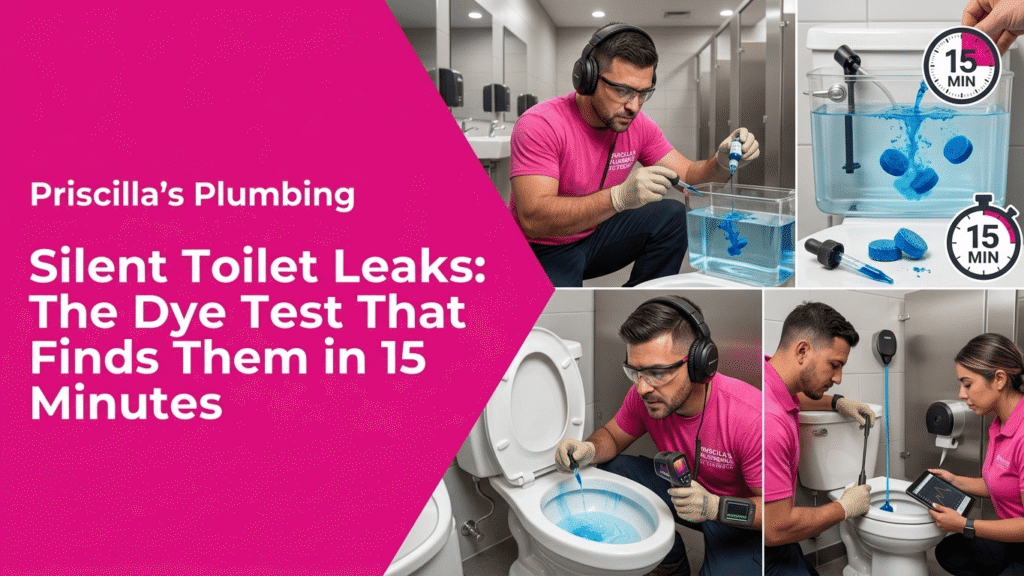
A toilet leak does not always make a sound. Sometimes, your toilet looks fine, flushes well, and leaves no water on the floor. Still, water might move from the tank into the bowl all day. You might only notice the problem when your water bill rises without a clear reason. This type of leak is easy to miss because the water loss happens inside the toilet.
Fortunately, you have a simple way to check. A few drops of food coloring and about 15 minutes give you a quick first test. The toilet leak dye test shows whether water is moving from the tank into the bowl when nobody flushes. But how to do it, and how does it determine a silent leak successfully? Today we will discuss everything in detail!
What Is a Silent Toilet Leak
A silent toilet fill valve leak happens when water leaves the tank without a flush. The water moves into the bowl and then down the drain. You might not hear running water. You might not see a puddle. Your toilet might look normal from the outside.
Inside the tank, though, a small part might not seal well. The flapper sits at the bottom of the tank. During a flush, the flapper lifts and lets tank water enter the bowl. After the flush, the flapper should close and hold water in the tank.
A worn or warped flapper might leave a small gap. Water then moves into the bowl between flushes. The U.S. Environmental Protection Agency recommends a simple food coloring test for silent toilet leaks.
How to Run the Toilet Leak Dye Test
The leak dye test gives you a clear answer in fifteen to twenty minutes, using nothing more than food coloring and your own eyes. The test checks whether water moves from the toilet tank into the bowl while the toilet sits unused.
What You Need
Grab a few drops of food coloring; dark colors work best against white porcelain. You do not need any tools, chemicals, or special kits for this test.
Step by Step
Lift the tank lid and set it somewhere safe. Add several drops of food coloring directly into the tank water, then close the lid without flushing. EPA guidance often uses a 5- to 10-minute wait. Other public utility instructions use about 15 to 30 minutes. For a simple home check, give the test about 15 minutes and watch for any color in the bowl.
Reading Your Results
Check the bowl after your wait time ends. If colored water shows up in the bowl, water is seeping from your tank without a flush, which confirms a leak. If the bowl water stays clear, your toilet holds water properly, and your bill likely comes from somewhere else in your home.
Is Flapper Valve Failure a Common Cause
Most flapper valve failure often starts with wear. The rubber part sits in water for long periods. Over time, the material might lose its shape or fail to seal as well as before.
EPA guidance says worn flappers often cause silent toilet leaks. EPA also recommends regular checks and notes flappers may need replacement as they age.
If your test shows dye in the bowl, inspect the flapper first.
Check for:
- Cracks or splits in the rubber.
- A warped or misshapen surface.
- A loose or tangled chain.
- Mineral buildup near the seal.
- A flapper that does not sit flat after a flush.
If the flapper looks worn, replacement is often the next step.
Is a Phantom Flush the Same Problem?
A phantom flush happens when a toilet seems to flush by itself. You might hear the toilet refill even though nobody used the handle.
A common phantom flush cause is water slowly leaving the tank through a poor flapper seal. As the tank water level drops, the fill valve starts again. The toilet then refills without a normal flush.
The cycle might repeat several times. If you hear your toilet refill on its own, run the dye test. The result gives you useful information about a possible flapper leak.
What About a Fill Valve Leak?
The fill valve controls fresh water entering the tank after a flush. A fill valve problem works differently from a flapper leak. If the fill valve keeps running, you might hear water entering the tank again and again.
Look inside the tank after a flush. If water keeps entering after the tank reaches its normal level, the fill valve or float might need attention. Most professionals say that if a running toilet wastes water after float adjustment might need a new fill valve.
A toilet fill valve and a flapper leak need different checks. The dye test mainly checks for water moving from the tank into the bowl.
When Your Water Bill Gives You a Clue
Your water bill gives you another reason to test your toilet. Look for a higher bill without a clear reason. Think about recent changes in your home’s water use. More laundry, guests, outdoor watering, or long showers might explain an increase.
If your normal use has not changed, inspect toilets and other fixtures. A silent toilet leak might be easy to miss because water disappears through the drain. There might be no wet floor or visible drip.
When to Call a Professional
Some toilet leaks fix themselves with a simple part swap, and others point to a bigger issue underneath the surface. Call a plumber when any of these situations apply to you.
- The dye test comes back positive more than once, even after replacing the flapper
- You hear constant hissing or running water alongside the dye result
- Water pools around the base of the toilet, not just inside the bowl
- Multiple toilets in your home show the same silent leak symptoms
- Your water bill stays high even after fixing the flapper and fill valve
Persistent toilet trouble sometimes points to a deeper issue in your home’s plumbing, not just a worn part. The common toilet issues in Fort Lauderdale homes need a professional if the dye test alone does not solve things.
Stop the Silent Drip and Save on Your Next Bill
A silent toilet leak costs you money every single day it goes unnoticed, and the toilet leak dye test takes fifteen minutes to end the guesswork for good. If the bowl stays clear, you have useful peace of mind. If the dye appears, you have a clear reason to inspect the toilet.
At Priscilla’s Plumbing, we provide practical service, careful leak checks, clear repair guidance, and experienced plumbing support to your home. From a simple flapper swap to a full fill valve replacement, one visit gets your toilet running clean and your water bill back under control.
Schedule your toilet inspection and water leak detection with Priscilla’s Plumbing today and put that silent drip to rest.
Frequently Asked Questions
How long should I wait during the toilet dye test?
Wait fifteen to twenty minutes without flushing or using the toilet. This window gives colored water enough time to seep through a worn flapper if one exists.
Can I use anything besides food coloring for the dye test?
Food coloring works best since it shows clearly against white porcelain, though any dark, water-based dye gives you a similar result.
Does a silent leak always mean I need a new toilet?
No. Most silent leaks trace back to a worn flapper or a faulty fill valve, both of which get replaced without needing a full toilet swap.
How often should I run the dye test?
Running the test once or twice a year catches most silent leaks early, especially in older toilets where the flapper and fill valve naturally wear down over time.