A small water stain on your Florida condo ceiling might point to a bigger problem above you. A slow drip under your kitchen sink might damage your own cabinets. A clogged drain might affect only your home, or it might connect to a pipe serving several units.
So, who pays for the repair?
The condo plumbing responsibility in Florida depends on where the problem starts, which homes the pipe serves, and what your condo documents say. Florida law sets basic rules for common elements, but your community’s Declaration of Condominium might assign certain repairs differently.
Let us help you understand Florida laws, find owner duties, and know association rules. Read on to learn who pays for your plumbing bill.
The Basic Rule for Condo Plumbing Responsibility in Florida
Florida Statute §718.113 says the condominium association handles maintenance, repair, and replacement of common elements. The declaration might assign some limited common elements to unit owners instead.
In simple terms, start with three questions:
- Where does the leak or blockage begin?
- Does the pipe serve one condo or several homes?
- Who does the Declaration of Condominium assign the repair to?
These questions help you understand your repair responsibility before you spend money.
The association also collects common expenses for property and systems it must maintain. Those costs follow the rules in Florida law and the community’s governing documents.
Who Pays for Plumbing Repairs in a Florida Condo?
Usually, there are two parties who pay for plumbing repairs
- Condo associations
- Homeowners
Here is the detail of how both parties became responsitble to pay for condo repairs.
- When the Condo Association Pays
The association generally handles plumbing parts classified as common elements. These often include shared systems and building components.
Examples include:
- Common water supply pipes. A main water line serving several units usually falls under the association’s maintenance duties.
- Vertical stack pipes. These pipes run through a building and serve multiple homes. A break in a shared stack needs prompt attention.
- Main drain lines. A drain serving several condos is different from a private sink drain inside your unit.
- Shared plumbing inside structural areas. A pipe inside a structural wall or beneath the building’s foundation needs a closer look. Its location alone does not settle the issue. The declaration and the pipe’s purpose matter.
Damage to common property. If a shared pipe damages a ceiling, wall, or other association-maintained property, the association’s repair duties may include those affected areas. The exact cost depends on the governing documents and the facts of the leak.
For example, a vertical drain stack breaks behind the bathroom wall. Water reaches the unit below. The stack serves several homes.
The association would generally handle the common pipe repair. It also needs to address any common property damage assigned to its care.
Your association bylaws, plumbing rules, and declaration help confirm the details.
- When the Unit Owner Pays
You generally handle plumbing fixtures and private lines inside your condo when the governing documents assign them to you.
Common examples include:
- Kitchen faucets and sink fixtures.
- Bathroom faucets, toilets, and vanities.
- Private water supply lines serving only your unit.
- Dishwashers and washing machines owned by you.
- Water heaters assigned to your unit.
- Private drain lines serving only your home.
Interior finishes such as paint, wallpaper, flooring, and personal property damaged by a private leak.
For example, your toilet supply hose breaks inside your bathroom. The hose serves only your toilet. Your repair obligation usually covers the hose and related fixture work.
The same applies to a dishwasher supply line serving your kitchen alone.
Still, do not rely on the fixture’s location alone. Your declaration might assign a specific component to the association.
What About Pipes Behind Walls or Under the Floor?
Hidden plumbing often creates the biggest confusion for Florida condo owners. Many owners assume every pipe behind their bathroom wall belongs to them. That assumption is not always correct.
A hidden pipe might serve:
- One condo.
- Several condos.
- An entire building.
The association’s maintenance duty generally covers common elements. The declaration might also assign certain limited common elements to unit owners.
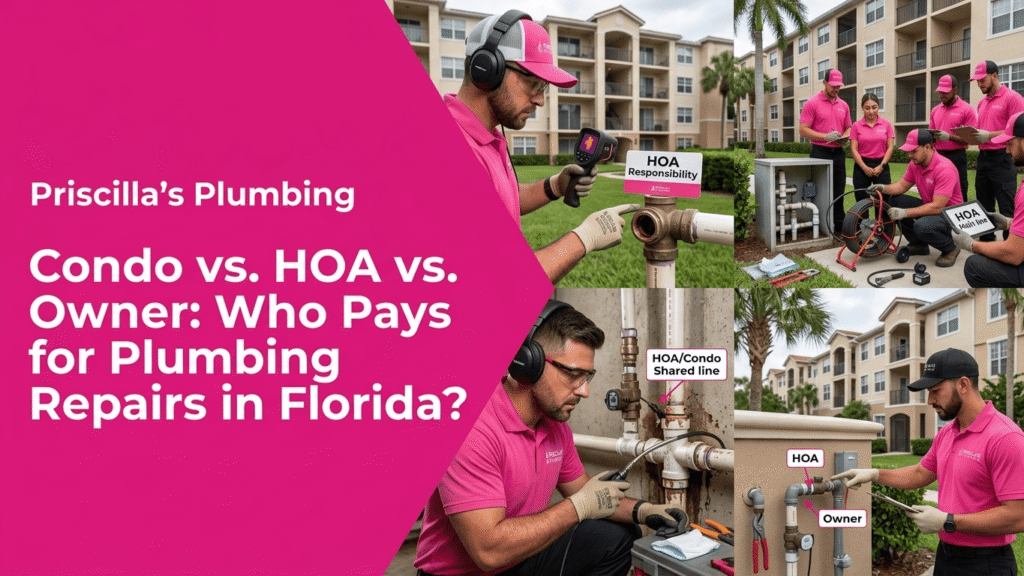
For example, a pipe behind your bathroom wall serves only your unit. Your documents might assign the line to you. Another pipe behind the same wall serves the condo above, below, and beside you. That shared line might fall under the association’s duties.
The material also does not settle the question. Older buildings sometimes have cast iron plumbing. A cast iron pipe behind a wall might be a common element water line, even when owners think all interior pipes belong to them.
This is why you should check the documents before approving major plumbing work.
Condo vs. HOA: What Is the Difference?
People often use “HOA” to describe any community association. Florida condos follow Chapter 718, which governs condominium associations. Other community types follow different rules.
For a condo owner, the key document is usually the Declaration of Condominium. For a townhouse or other HOA property, the declaration, bylaws, and maintenance rules help define who handles plumbing repairs.
The same leak might have different payment rules in different communities.
For example, one condo association might maintain a shared water line. Another community might assign a limited common element to the owners who use it.
Your community’s documents control the details within the limits of Florida law.
If you own a townhouse or condo, follow all plumbing maintenance tips for Pompano Beach homes well before a dispute over responsibility ever comes up.
Who Pays for Shared Wall Leak Damage?
A shared wall leak liability often creates a second problem. The plumbing repair and the water damage repair might involve different responsibilities.
Consider this example.
A pipe behind your kitchen wall breaks. The pipe serves only your unit. Water damages your cabinets and flooring. Your unit owner repair obligation might include the pipe and interior finishes, depending on your documents.
Now consider another example.
A shared pipe behind the wall breaks. Water damages your ceiling and the condo below.
The association might handle the shared pipe and common property damage assigned to its care. Your own insurance and the community’s insurance rules might also affect the cost of damaged personal property and finishes.
Do not assume the owner of the condo where water appears caused the leak. Water often travels from another unit or a shared pipe.
The source of the leak matters more than the location of the stain.
What If the Association and Owner Disagree?
A plumbing dispute often starts with one question: Is the pipe a common element or a unit component?
- Ask the association for a written explanation.
- Request the relevant section of the declaration.
- Ask the plumber to identify the pipe and which homes it serves.
- Keep repair estimates, photos, and written messages.
If the cost or responsibility remains disputed, a Florida community association attorney can review the governing documents and applicable law.
Do not approve a major repiping project based only on a verbal statement about who pays.
Get the Leak Fixed Before the Damage Spreads
The answer to condo plumbing responsibility in Florida must be clear and timely. The right first step is to identify the leak source, check your community documents, and arrange a professional inspection.
At Priscilla’s Plumbing, we work directly with unit owners, property managers, and condo boards to resolve complex plumbing issues without hassle. From a private fixture leak to a shared water line, the goal is simple. Find the problem, protect your home, and get the right repair moving.
Call Priscilla’s Plumbing services today and turn a confusing leak into a clear, documented answer.
FAQs
Does the condo association pay for a pipe behind my wall?
Not always. The association generally handles common elements, while the declaration might assign certain limited common elements to owners. A pipe serving several homes often receives different treatment from a private line serving one unit.
Who pays for a water heater in a Florida condo?
The owner generally pays for a water heater assigned to the unit. Check your declaration for the exact maintenance and replacement duty.
Who pays for a leaking toilet?
The unit owner usually handles the toilet, its internal parts, and private supply line. Your governing documents control the final responsibility.
Does the association pay for drywall damaged by a shared pipe?
The association might handle common property damage assigned to its care. The exact answer depends on the source of the leak, the governing documents, and insurance rules.
Does Florida law require the association to maintain common plumbing?
Florida Statute § 718.113 generally places common element maintenance, repair, and replacement with the association, subject to the statute and declaration.
What if the pipe is old cast iron?
Age and material do not decide ownership. Check whether the pipe serves one unit or several and how the declaration assigns responsibility.