
Every year, property owners across Broward County get a notice in the mail. It is time for your annual backflow assembly testing. Most of the time, a licensed plumber comes out, hooks up their test kit, signs the paperwork, and you forget about it for another twelve months. But what happens if your system does not pass?
Finding out you have a failed backflow test: what to do next can feel stressful. You might worry about your water being cut off, face local fines, or wonder how much the repair will cost. The good news is that a failed test is a very common issue with a straightforward fix.
Let us look at exactly what a failed test means, why it happened, and how to resolve the problem quickly to keep your water safe and compliant with local laws.
What Exactly Is a Backflow Preventer Failure?
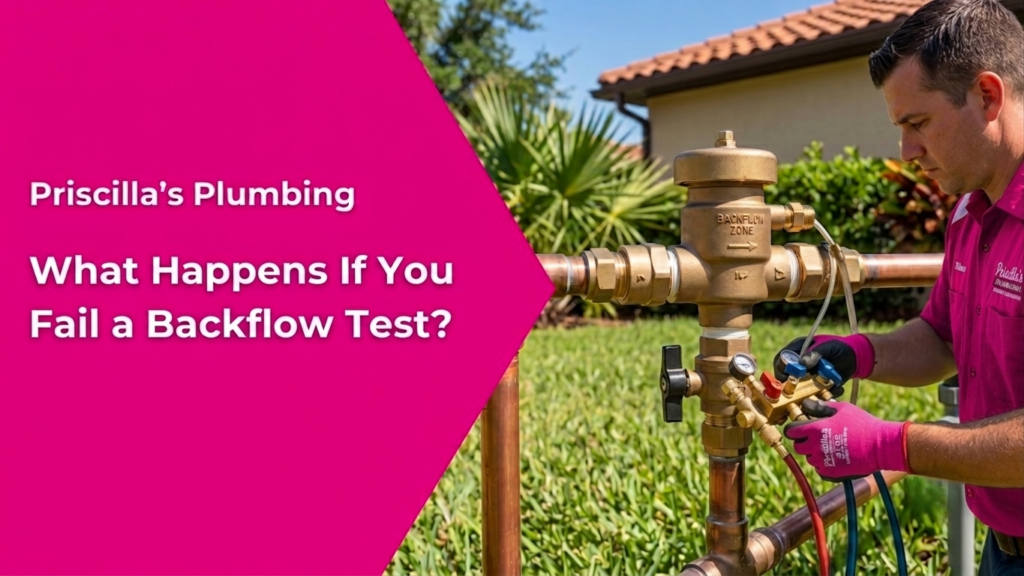
A backflow preventer is a mechanical valve installed on your water line. Its only job is to stop dirty water from traveling backward into the clean public water supply. This can happen if there is a sudden drop in city water pressure, such as during the use of a nearby fire hydrant or a water main break.
When a plumber says your device failed the test, it does not mean your drinking water is currently contaminated. It simply means the internal parts of the valve did not hold the exact pressure required by local building and safety codes. The safety net has a tear in it, and it needs to be fixed before a real pressure drop occurs.
The Real Danger Is a Shutoff Notice
Local water utilities take cross-contamination very seriously. If your property fails the test and you ignore the repair timeline, the city will issue an official water shutoff notice. If left unaddressed, they will turn off the water supply to your property to protect the public water system.
The Top Reasons Backflow Devices Fail
Because these devices have moving parts that constantly live under high water pressure, wear and tear is normal. Here are the most common reasons a device fails its annual inspection:
- A worn check valve seal: Inside the device, rubber seals block water from moving backward. Over time, South Florida’s warm water and natural minerals degrade these rubber pieces. A tiny tear or a hardened piece of rubber is the number one cause of failure.
- Debris and sediment: Small bits of sand, rock, or rust traveling through the main lines can get trapped underneath the internal valve discs. Even a tiny grain of sand can prevent a valve from closing completely.
- Spring fatigue: The internal valves use heavy-duty springs to slam shut during a pressure change. Over several years, these metal springs lose their tension and fail to hold back the required pressure.
- Mechanical calcification: High mineral content in localized water can cause mineral buildup on the metallic moving parts, stopping them from sliding freely.
Now You Have Failed the Backflow Test: What To Do
When a failure happens, your clock starts ticking toward your regional recertification deadline. You usually have between 15 and 30 days from the initial test date to repair the device and submit passing paperwork to the county or city utility database. Here is the fast track to getting it fixed:
Step 1: Clean and Flush the Unit
Often, a certified tester can resolve a minor failure on the spot by shutting off the water, opening the device covers, and clearing out any trapped sand or rust. If debris was the only issue, flushing the valve might allow it to pass a retest immediately.
Step 2: Install an RPZ Kit
If the internal components are damaged or worn, the most affordable and fastest permanent solution is a rebuild. Your plumbing specialist will use an official RPZ rebuild kit (Reduced Pressure Zone kit). This package contains brand-new rubber gaskets, O-rings, check valve discs, and springs designed specifically for your exact model. Swapping out the old parts makes the interior of the valve perform like a brand-new machine.
Step 3: Full Backflow Replacement
If the outer bronze body of the valve is cracked, deeply pitted from mineral scale, or if the unit is so old that manufacturers no longer produce internal replacement parts, you will need a complete backflow device replacement. While this costs more than a basic rebuild kit, a new unit gives you total reliability and compliance for many years to come.
Turn a Failed Test Into a Fast Fix
Dealing with a code violation notice or facing a failed backflow test: what to do. But keeping your property legal doesn’t have to be a headache. You need a team that handles the repair and the county paperwork correctly the first time.
Priscilla’s Plumbing provides full-service, licensed backflow testing, repair, and certification. We stock common RPZ rebuild parts right on our trucks to fix failures the same day whenever possible, offer transparent flat-rate pricing before we begin, and handle your entire official report submission directly through the county portal so you don’t have to worry about deadlines.
Call us today or visit our office to get your backflow system fixed, certified, and fully approved fast.
Frequently Asked Questions
Does a failed backflow test mean my water is unsafe?
No. It means the device did not hold pressure to code standards, not that contamination occurred. It still needs prompt repair to keep the water supply protected going forward.
How long do I have to fix a failed backflow device?
It varies by water authority, but most South Florida deadlines fall between 15 and 30 days. Your specific recertification deadline will be printed on the notice.
Can I repair the device myself?
No. Florida requires backflow repairs to be performed by a certified backflow technician, and the device must be retested by a certified tester afterward.
What happens if I ignore the deadline?
Expect a follow-up notice first, then possible fines, and in prolonged cases, a water shutoff notice from your utility.
Is repair cheaper than replacement?
Usually, yes. An RPZ kit is often the more affordable fix, but replacement makes more sense for older devices or units with repeated failures.