
When a plumbing pipe breaks inside a wall, you see the water quickly. When a pipe breaks beneath your feet, it is a completely different animal. Here is where you need slab leak detection in South Florida and the surrounding area. By why?
Most homes in our region are built on a single layer of reinforced concrete, which means your floor sits directly on the dirt. All your main water supply lines run underneath that heavy concrete. When one of those buried pipes cracks or rusts, you have a slab leak.
Because the damage happens completely out of sight, it can quietly ruin your floors and weaken your foundation before you realize anything is wrong. Here is how to do slab leak detection, what causes them, and what you should expect to pay to fix them.
Warning Signs to Find Hidden Slab Leak Detection In South Florida
The best part of warning signs is that they are never silent. They start showing before it becomes a disaster. When it comes to a slab leak, you do not have to rip up your floors to know a pipe has failed. Your home will tell you there is a problem through a few distinct warning signs.
- Surprisingly High Water Bill
An unexplained high water bill is usually the very first clue. If your family’s daily habits have not changed but your monthly water statement suddenly spikes, water is escaping somewhere constantly. A gradual increase over three months often points to a small, growing hole.
- The Sound of Running Water
When every single faucet, shower, and washing machine in your house is turned completely off, your home should be silent. If you can hear a faint hissing, whistling, or rushing sound near your baseboards, water is actively moving through a broken line.
- Damp Floors and Musty Smells
In our humid climate, hidden moisture creates mold fast. If your carpets feel perpetually soggy or your baseboards are beginning to discolor and smell earthy, water is wicking up through the porous concrete foundation.
- A Warm Patch on the Floor
If you walk barefoot across your tile, vinyl, or laminate flooring and notice one warm spot on the floor, you are likely standing directly over a broken hot water line. The leaking water is heating the concrete slab from beneath.
Why Do Pipes Break Under Concrete?
Slab leaks are incredibly common across Broward and Palm Beach counties. Research shows that a majority of older homes built in the southern United States will eventually experience an under-floor pipe failure due to three local factors.
1. Soil Shifts and Settling
If the ground beneath your home was not packed perfectly before the concrete pour, the earth will slowly settle and sink. As the soil shifts, it puts intense physical pressure on the buried lines, causing them to crack or bend.
2. Chemical Corrosion
Most older homes in the area rely on copper plumbing lines. When copper stays buried in damp soil for decades, a chemical reaction occurs. This corrosion eats away at the metal from the outside in, eventually creating a tiny pinhole copper leak that sprays water under high pressure.
3. High Water Pressure
When municipal water enters your home at a pressure that is too high, it creates constant friction inside the pipe elbows and joints. Over time, this wear and tear thins the pipe walls until they split.
How Professionals Find the Leak Without Guesswork
Years ago, plumbers had to use jackhammers to break up random sections of a floor just to search for a hole. Today, that messy guesswork is gone.
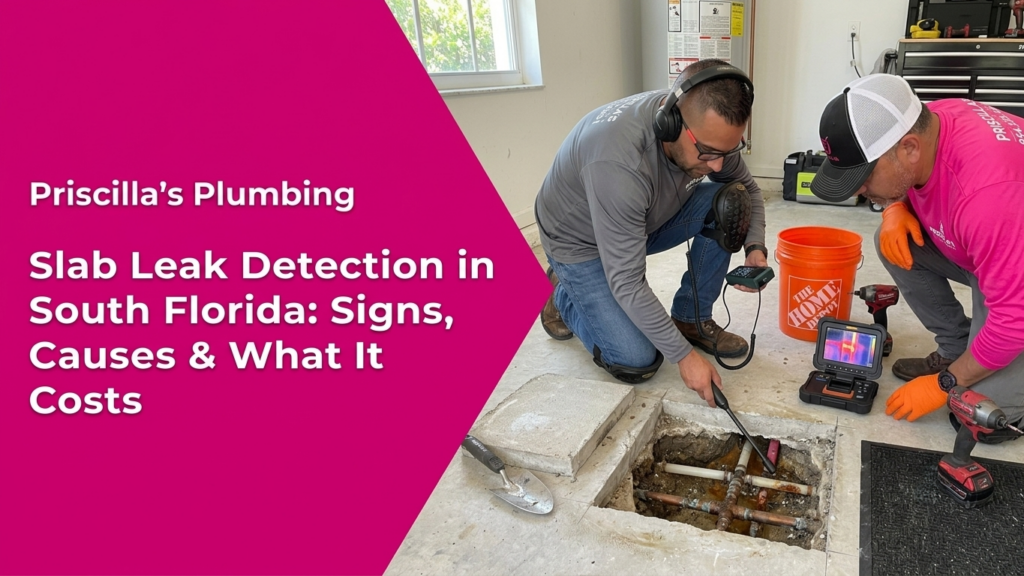
Modern technicians use specialized electronic leak detection equipment to locate the exact spot of the failure. By using sensitive acoustic listening tools and thermal imaging cameras, a licensed plumber can listen to the vibrations of the escaping water and map the hot zones through the concrete. This allows them to pinpoint the break with absolute accuracy before making a single cut.
What Does Slab Leak Detection and Repair Cost?
Dealing with a slab leak involves two separate steps: finding the hole and fixing the pipe. According to local market data across South Florida, here is the cost breakdown:
| Service Type | Average Price Range | What It Covers |
| Electronic Leak Detection | $150 to $400 | High-tech acoustic mapping to find the exact location of the break without damaging your floors. |
| Direct Spot Repair | $630 to $4,400 | Breaking through a small section of slab-on-grade foundation to cut out the broken pipe and solder in a fresh piece. |
| Pipe Rerouting | $600 to $4,000 | Abandoning the broken underground line completely and running a brand-new water line through your walls or ceiling. |
Your total bill depends entirely on how hard the spot is to reach. A simple leak under an open utility closet floor is inexpensive to fix. A leak tucked directly under custom kitchen cabinets or premium bathroom tile will cost more because it requires careful demolition and professional rebuild to restore the finishes.
Protect Your Foundation with South Florida’s Precision Specialists
A slab leak detection in South Florida is not a problem that fixes itself, and waiting only drives up your water bill and damages your foundation. You need a long-term solution from an experienced team that knows how to protect your property.
Priscilla’s Plumbing provides accurate, non-invasive slab leak detection and repair across South Florida. We don’t believe in messy guesswork or hidden fees. We bring advanced acoustic tools to locate your leak with pinpoint accuracy, offer clear flat-rate pricing before any work begins, and specialize in smart pipe-rerouting techniques that keep your beautiful floors completely untouched.
Think you might have a hidden leak under your floor? Call us today or visit our office to get a licensed expert out to protect your home.
Frequently Asked Questions
- How do I know if I have a slab leak?
Watch for a warm spot on the floor tile, an unexplained high water bill, low water pressure, or the sound of running water when everything is off.
- Can a slab leak fix itself or go away?
No. A slab leak only gets worse over time and continues to damage your foundation and flooring, the longer it runs.
- How long does slab leak detection take?
Most homes take a few hours for a full electronic leak detection scan, though larger homes or multiple leaks can take longer.
- Is slab leak repair covered by homeowners insurance in Florida?
It depends on the cause. Sudden pipe failure is often covered, while gradual corrosion typically is not. Check your policy for details.
- Can I use a DIY leak detector app instead of calling a plumber?
No. A phone microphone cannot hear water moving through several inches of solid concrete, and guessing at the location often means breaking the wrong spot.