
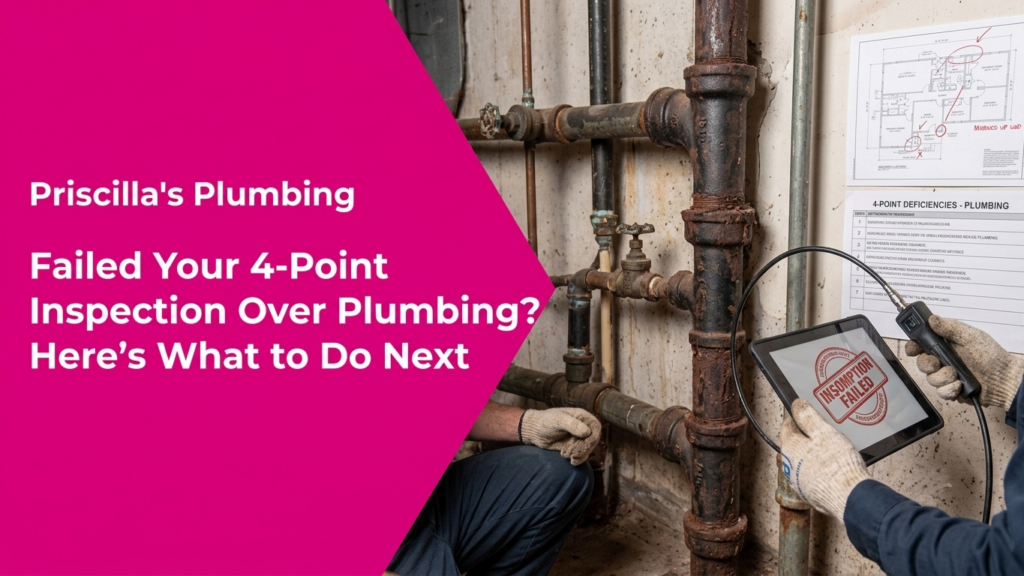
You open the envelope from your insurance company. Your heart drops. The letter says you have a 4-point inspection plumbing failure and your plumbing lines caused the problem. Your mind races to your next question: what now?
Here is a quick answer: A 4-point inspection failure usually means active leaks, damaged pipes, an old water heater, or missing pressure valves. Fix the problem fast. Hire a licensed plumber, repair or replace the failed parts, and send proof of the work to your insurance company.
Most homeowners fix a failed inspection and keep their policy within a few weeks. How do they do that? Follow this guide to clear your inspection report and protect your house.
Common Problems That Cause 4-Point Inspection Plumbing Failure
Insurance inspectors check four systems in your home: roof, electrical, HVAC, and plumbing. The experts declare cast iron pipe inspection failure for a small number of clear reasons.
Active Leaks Under Sinks or Toilets
Inspectors check under every sink and around every toilet. A slow drip counts as an active leak. Insurance companies see leaks as a sign of bigger damage waiting to happen.
Corroded or Rusted Pipes
Old galvanized steel pipes rust from the inside out. Rust builds up, water pressure drops, and pipes eventually crack or burst. Inspectors flag rusted pipes fast, since a burst pipe causes major water damage.
Old or Leaking Water Heaters
A water heater over 15 to 20 years old fails most inspections automatically. Age alone raises the risk of a tank rupture. A leaking unit fails on the spot, no matter the age.
Missing Pressure Relief Valves
Every water heater needs a temperature and pressure relief valve. This valve releases pressure before your tank builds up too much heat or force. A missing or broken valve creates a real safety risk, and inspectors treat this issue as a serious failure.
Why Cast Iron and Polybutylene Pipes Fail Inspection
Certain pipe materials cause more failed inspections than others across Florida homes.
In most cases, cast iron inspection failure happens often in homes built before 1975. Cast iron drain lines corrode from the inside, and the corrosion stays hidden until a leak or backup appears. Inspectors often request a camera scope of these lines before your policy renews.
Furthermore, polybutylene insurance denial happens with pipes installed between 1978 and 1995. This gray plastic pipe breaks down over time from chlorine exposure in city water. Many insurance companies deny coverage or charge higher premiums for homes with polybutylene pipes still in place. Replacing this pipe material removes the risk and often restores your standard coverage rate.
Steps to Fix a Failed 4-Point Inspection
You cannot sit idly when your inspection failed. Fixing a failed inspection follows a clear path. Move through each step in order.
Hire a Licensed Plumber
Call a licensed plumber to inspect every item listed on your failed report. A licensed plumber knows Florida building codes and insurance requirements, so the repair meets the standard your insurance company expects.
Repair or Replace Broken Pipes
Fix every leak and replace every damaged pipe section. Do not patch a symptom and skip the real cause. Insurance companies often deny future claims tied to a repair that only covered the surface problem.
Install a New Water Heater
Replace your water heater if the unit is past 15 years old or shows any sign of leaking. A new water heater removes this failure point completely and often lowers your premium too.
Keep Every Receipt
Save every invoice, receipt, and work order from your plumber. Insurance companies require proof of completed work before they restore or renew your policy.
What Florida Insurance Companies Require
Florida insurance companies follow strict rules around plumbing age and condition, especially after storm season claims across the state rise year after year. Here are complete Florida insurance plumbing requirements that may help you get the re-inspection faster.
Send Proof to Your Insurance Company
Send copies of every receipt and photo of the finished repair to your insurance company. Clear photos of the new pipe, valve, or water heater speed up your review.
Get a Letter of Completion
Ask your plumber to write a letter of completion. This letter confirms the failed items received proper repair, and most insurance companies require this document before they close your file.
Obtain a Recertification
Ask your licensed plumber for a formal letter of completion on company letterhead. This letter states that all plumbing failures on your inspection report were fixed to code.
Some insurers accept this official plumber letter directly. Others require a formal plumbing recertification form signed by the plumber.
Request a Re-Inspection
Some insurance companies require a new 4-point inspection after repairs finish. Schedule the re-inspection once your plumber confirms every repair meets code. A passed re-inspection restores your policy and removes the risk of a canceled plan.
Turn Your Failed Report Into a Passed Inspection
A 4-point inspection plumbing failure feels stressful, and every day your policy sits at risk adds pressure. Take the above necessary steps and pass the inspection in no time. You can easily pass this inspection when you have a trained and experienced plumber by your side.
At Priscilla’s Plumbing, our repipe services know exactly what Florida insurance companies look for on a re-inspection. We show up fast, day or night, fix the failed items right the first time, and hand you every receipt and letter your insurance company needs.
Call today for complete cast iron pipe replacement in South Florida and turn your failed report into a passed one.
FAQ
How long do I have to fix a failed 4-point inspection?
Most Florida insurance companies give homeowners 30 to 60 days to complete repairs. Check your letter for your exact deadline, since some companies set shorter windows.
Will my insurance company drop me for a failed inspection?
A failed inspection alone rarely drops your policy right away. Insurance companies usually cancel a policy only after the deadline passes without proof of repair.
Does replacing one pipe section fix a cast iron pipe inspection failure?
A single pipe repair rarely satisfies inspectors when cast iron corrosion runs through the full system. Full replacement usually offers the only lasting fix accepted by insurance companies.
Do I need a new water heater if mine still works?
Age alone fails many inspections, even without a leak. A unit past 15 to 20 years old often needs replacement to pass, regardless of current performance.