
Storm season changes everything in South Florida. The sky turns dark. The wind picks up. Your phone buzzes with a hurricane warning. While neighbors board up windows, smart homeowners also check one thing many people forget: their home plumbing.
High winds damage roofs, but hidden water damages your floors, walls, and health. Heavy rain fills city sewer pipes fast. Dirty water backs up into home sinks and showers. So what to do in this situation? You just need a complete checklist for hurricane plumbing preparation in Florida so you can protect your home.
Follow this checklist to keep your family safe and your pipes dry.
A Thorough Hurricane Plumbing Preparation Florida Needs
South Florida sits on flat, sandy ground with high water tables. Heavy rain cannot soak into the ground fast enough. Water collects around your home foundation. City pipes overflow during big storms.
Without proper preparation, dirty flood water enters your clean drinking pipes. Sewer lines push waste backward into your bathrooms. Fixing flood damage costs thousands of dollars. Simple pre-storm checks prevent these big disasters.
Here is how to prepare your plumbing for hurricane season in South Florida without incurring damage.
1. Before Hurricane Season Begins
The very first step is to start by checking your appliances in your home. Start your checks weeks before storms enter the ocean. Early preparation gives you time to fix broken parts.
Test the Main Shutoff Valve
Locate your main water supply valve outside or near your water meter. Turn the valve knob clockwise to close it. Turn it counterclockwise to open it.
The valve must turn smoothly without sticking. Old metal valves rust quickly in South Florida moisture. Replace a stuck valve before a storm threatens your neighborhood. A working valve helps you stop water flow instantly during emergencies.
Inspect for Minor Leaks
Walk through your home and look under every sink. Check around toilet bases, water heaters, and washing machines.
Fix small drips immediately. High water pressure during storms turns small drips into burst pipes. Look for wet spots on drywall and soft wood under cabinets. Damp spots point to hidden leaks inside your walls.
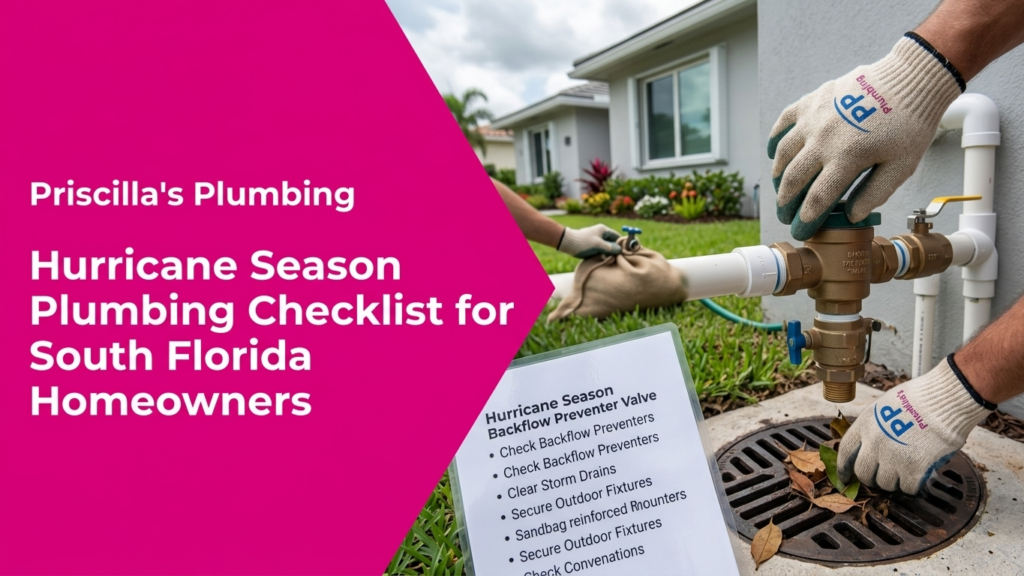
Check Backflow Preventers
A sewer backflow valve stops dirty city water from entering your home. Heavy rain causes storm surge sewer backup in street lines.
Locate your backflow valve on your main sewer pipe outside. Open the access cover and clear away dirt or plant roots. Check the inner flap. The flap must move freely to block reverse water flow. Clean the rubber seal so it closes tight.
Service Sump Pumps
Homes with sumps or basement basins need working pumps. Pour two buckets of clean water into your sump pit to test the pump.
The pump must turn on automatically and clear the water fast. Clean floating debris out of the pit. Buy a battery backup system for your pump. Storms break power lines for days. A battery system keeps your pump working when the power goes out.
2. When a Storm is Approaching
After checking the valves for floodback, backflow contamination, and other debris, the second step is to keep your brain open. Watch local weather reports closely. Take these steps when your area enters a storm warning zone.
Clear Outdoor Items
Walk around your yard and collect loose items. Disconnect all garden hoses from outside spigots. Store hoses inside your garage or shed.
Cover outdoor spigots with plastic caps or foam covers. High winds turn loose hoses into dangerous items that snap spigots off walls. Secure pool pump covers and turn off automatic pool fill lines.
Clean Drains and Gutters
Rainwater must move away from your foundation quickly. Clear leaves, dirt, and sticks out of your roof gutters and downspouts.
Check your yard French drains and surface grates. Remove dead grass and dirt blocking the grate openings. Direct downspout extensions at least five feet away from home walls. Clean drains prevent standing water from seeping through your concrete slab.
Secure the Water Heater
Water heaters hold 40 to 80 gallons of water. High winds and moving floodwater tip unsecured tanks over. Tipped tanks break gas lines or rip electrical wires.
Check the metal straps around your water heater tank. Tighten the bolts holding the straps to the wall studs. Add heavy metal plumber tape if your tank lacks upper straps. Solid strapping meets South Florida building safety rules and prevents fire hazards.
Store Emergency Water
Clean tap water becomes scarce after major storms. Wash your bathtubs with soap and water. Rinse them completely.
Fill your tubs with clean tap water. Fill clean plastic jugs with fresh water for cooking and drinking. Use bathtub water to fill toilet tanks when city water stops running. Stored water keeps your family clean during long power outages.
- Right Before Landfall
Now you know the storm is about to hit your home. You need something potent to protect your home and family. Perform these final tasks six to twelve hours before the storm hits your coast.
Execute Water Shutoff
Locate your main water valve once more. Turn the valve knob completely off.
Doing a pre-storm water shutoff protects your home from backflow contamination. Main city water pipes snap during severe storms. Broken city pipes pull dirty groundwater into the public supply. Closing your main valve keeps clean water inside your home pipes.
Turn Off the Water Heater
Walk to your main electrical breaker box. Flip the breaker switch marked water heater to the off position.
Electric heating elements burn out in seconds without water inside the tank. Turning off the breaker stops electrical shorts when power fluctuates. Turn off the gas valve on gas water heaters to prevent fuel leaks.
- After the Storm Passes
Now hurricane and heavy rain are settling in. Now you need to take some measures. Stay safe after the wind stops. Check your home carefully before turning systems back on.
Schedule a Post-Hurricane Inspection
Walk through your yard and check for wet, sunken spots in the grass. Deep wet spots show broken underground pipes. Inspect your home for new wall cracks or damp floors.
Do not turn your main water valve on if you see leaks. Call a licensed plumber to inspect your lines first. A post-hurricane plumbing inspection catches hidden pipe shifts caused by oversaturated soil.
Restoring Your Water Supply
Open your main water valve very slowly after city officials clear the public water supply. Listen for rushing water sounds inside your walls.
Turn on your water heater breaker only after your pipes fill with water completely. Flush your faucets for three minutes to clear trapped air and minor sediment.
Get Your Home Ready Before the Next Storm Warning
Plumbing disasters happen fast during severe storms. But with vigilant hurricane plumbing preparation in Florida, you can easily take care of your property and loved ones. Just don’t do it alone. Find a partner who can help you check everything on your behalf and enable you to survive storm season safely.
At Priscilla’s Plumbing, we bring four generations of local experience directly to your door. Our family team helps you prepare your plumbing for hurricane season in South Florida. Why? Because we are experts during storms, hurricanes, and rainy season.
Do not wait for dark storm clouds to gather over your roof. Call our emergency plumbing team at (954) 982 6244 or schedule your pre-storm inspection online now.
FAQ
How early should I start my hurricane plumbing checklist?
Start before June, when hurricane season officially begins. Waiting for a storm warning leaves too little time to fix a stuck valve or a weak pipe joint.
Should I turn off my main water valve for every storm?
Turn off your main valve for major storms and hurricanes, especially once local officials warn of flooding or a water main break in your area.
Why does my water heater need straps?
Straps keep your water heater from tipping or shifting during high wind and flooding. A tipped water heater risks a gas leak and a broken water line.
What should I do if I smell sewage after a storm?
Stop using your drains and call a plumber right away. A sewage smell often means storm surge sewer backup pushed dirty water into your home plumbing.