
Most homes in South Florida sit on a concrete slab, and running through or beneath that slab are the water lines that feed every fixture in the house. When one of those pipes springs a leak, the water has nowhere obvious to go. It seeps into the ground under your foundation or pushes up through the concrete, often for weeks before anyone notices. By then, the damage is rarely cheap.
Slab leaks happen everywhere homes are built on slabs, but they are worse here. South Florida’s high water table, sandy soil, and humid climate combine to attack underground pipes and hide the evidence longer. Here is why that happens, how to spot a slab leak early, and what your real options are once you find one.
What Is a Slab Leak?
A slab leak is a leak in a water supply or drain line that runs beneath or within your home’s concrete foundation. These pipes carry both hot and cold water to your fixtures, and when one fails, water escapes directly into the soil under the slab or rises up into the home.
There are two kinds, and they behave differently:
- Hot water line leaks are often noticed sooner because they create a warm spot on the floor.
- Cold water line leaks are sneakier. With no temperature change to feel, they can run undetected far longer, which usually means more damage by the time they surface.
Because the pipe is buried under inches of concrete, you rarely see or hear the leak directly. You catch it by its symptoms.
Why South Florida’s High Water Table Makes Slab Leaks Worse
This is the part most articles skip. They mention “shifting soil” and move on. The water table is the specific reason slab leaks are a bigger problem in Broward County than in drier parts of the country.
Sandy soil that moves with moisture
South Florida sits on sandy, porous soil that shifts easily as moisture levels change. When the ground around your foundation saturates and dries repeatedly, it expands and contracts, putting constant stress on the rigid pipes locked in the slab. Over time, that movement cracks pipe walls and pulls joints apart.
A water table that sits close to the surface
Much of South Florida has a naturally high water table, meaning groundwater sits only a few feet below the surface. During the wet season and heavy storms, the water rises even higher, sometimes right up against the foundation. This does several damaging things at once:
- It keeps the soil around your pipes constantly wet, which accelerates corrosion on metal lines.
- It worsens soil movement, since saturated sand shifts more than dry sand.
- It hides leaks, because a pipe leaking into already-saturated ground produces fewer obvious surface signs.
Humidity and corrosion
The same humidity that defines the climate also speeds up pipe corrosion once any moisture is present. A small pinhole leak in a wet, warm environment grows faster than it would in a dry climate.
Put together, a slab leak that might stay small for years elsewhere can corrode, spread, and undermine soil far more quickly here.
What Causes Slab Leaks
Beyond the water table, several specific failures lead to slab leaks in South Florida homes:
- Pipe corrosion. Older copper and galvanized lines corrode in acidic, moist soil, eventually forming pinhole leaks that grow over time.
- Abrasion. As pipes expand, contract, and shift, they rub against the concrete and sand around them. That friction slowly wears through the pipe wall.
- High water pressure. Excessive pressure stresses every pipe in the home, and the ones under the slab are the hardest to reach when they fail. Pressure fluctuations from municipal systems are common locally.
- Poor original installation. Pipes bent too sharply, joined poorly, or laid on improperly compacted soil fail early.
- Soil shifting and settling. The sandy-soil-plus-water-table combination covered above.
Warning Signs of a Slab Leak
A slab leak hides, but it leaves clues. Watch for these:
- An unexplained spike in your water bill with no change in how much water you use
- A warm or damp spot on the floor, especially noticeable on tile or concrete
- The sound of running water when every fixture is off
- A drop in water pressure throughout the home, often developing gradually over weeks
- Cracks in flooring, walls, or the foundation as the soil shifts and washes away
- Mold or a musty smell with no obvious source, often near baseboards or the floor
- Buckling, warping, or damp carpet and baseboards
Any one of these warrants a professional inspection. Several of them together strongly point to a slab leak.
Why Early Detection Saves Thousands
A slab leak does not stay the same size. Left alone, escaping water erodes the soil supporting your foundation, which leads to settling, cracks, and eventually structural damage. Persistent moisture breeds mold. What starts as a pinhole repair can grow into foundation work costing many times more.
The math is simple: detection is cheap relative to structural repair. Catching the leak while it is small is the single biggest factor in keeping the bill manageable.
How Professionals Detect a Slab Leak
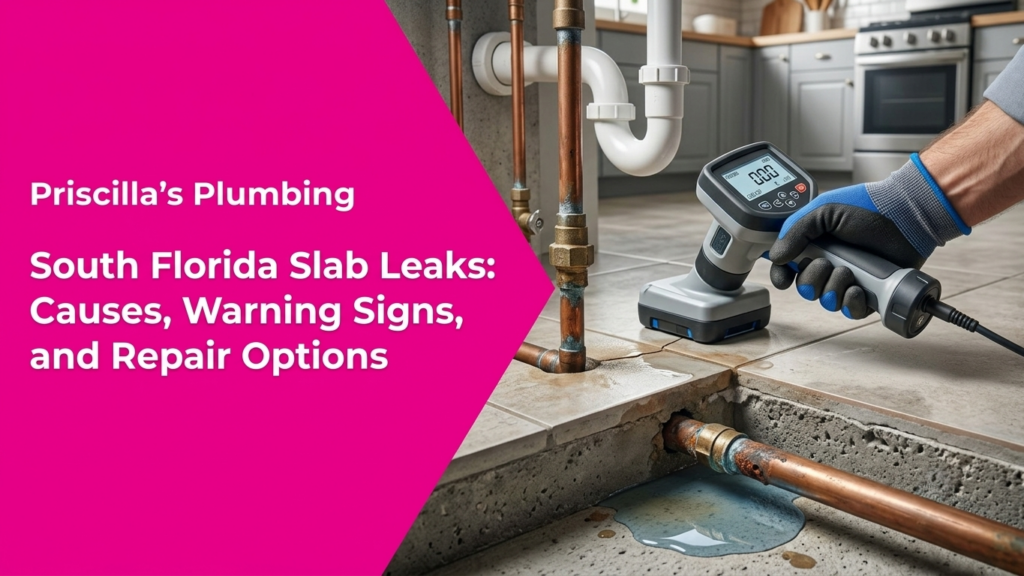
The goal of modern detection is to find the exact spot without tearing up your whole floor to look for it. A skilled plumber uses non-invasive equipment:
- Acoustic listening devices that pick up the specific sound a pressurized pipe makes as water escapes, sensitive enough to detect a small drip several feet down.
- Thermal imaging that spots temperature differences from a hot water line leak.
- Electronic leak detectors and line tracing that pinpoint the leak’s location and depth.
Pinpointing the leak precisely is what allows a targeted repair instead of demolishing concrete across the room. Professional water leak detection turns a guess into an exact location before anyone breaks the slab.
Slab Leak Repair Options
Once the leak is located, there are generally three approaches. The right one depends on the pipe’s condition, the leak’s location, and how much of the system is at risk.
Spot repair
The plumber opens a small section of the slab, repairs or replaces the failed length of pipe, and patches the concrete. Best when the leak is isolated, and the rest of the piping is in good shape. It is the least expensive option, but it does nothing for the rest of an aging system.
Rerouting
Instead of going back under the slab, the plumber abandons the failed line and runs a new pipe through the walls or the attic to bypass the slab entirely. A good middle option when the buried pipe is in a hard-to-reach spot.
Repiping
When the leak is one of several, or the pipe material itself is at the end of its life, replacing the affected lines makes more sense than chasing leaks one at a time. If you are seeing repeat slab leaks, the pipe is telling you the material is done.
A common mistake homeowners make is authorizing a spot repair on a system that is failing everywhere, then paying again months later when the next pinhole opens a few feet down. A proper diagnosis should tell you whether you are fixing one leak or buying time on a system that needs replacing.
Can You Prevent Slab Leaks?
Not every slab leak is avoidable, but you can lower the odds:
- Keep water pressure in a safe range. Have a plumber check it and install a pressure regulator if it runs high.
- Schedule annual inspections. Ask your plumber to check for corrosion, pressure issues, and early leak signs once a year.
- Act on early signs fast. The cheapest slab leak is the one caught in week one.
Priscilla’s Plumbing handles slab leak detection and repair for homes across Oakland Park, Fort Lauderdale, and the surrounding Broward area, and answers the phone 24/7 when a hidden leak turns into an emergency.
FAQ
What is the most common first sign of a slab leak?
Often an unexplained jump in the water bill, or a warm, damp spot on the floor.
Are slab leaks covered by homeowners’ insurance in Florida?
Coverage varies by policy; many cover the water damage but not the pipe repair itself.
How much does slab leak detection cost?
Detection typically runs a few hundred dollars, far less than the structural damage a missed leak causes.
Can a slab leak damage my foundation?
Yes. Escaping water erodes supporting soil and can cause settling, cracks, and structural damage over time.
Why are slab leaks worse in South Florida?
The high water table, shifting sandy soil, and humidity accelerate pipe corrosion and hide leaks longer.
Can I fix a slab leak myself?
No. Locating and repairing pipes under concrete requires specialized equipment and should be done professionally.
How long can a slab leak go undetected?
Cold water leaks can run for weeks or months, since there is no warm spot to give them away.