
Older homes in Fort Lauderdale have a particular kind of charm: terrazzo floors, solid construction, mature trees, and neighborhoods that were built to last. What was not built to last is the plumbing hidden inside the walls and under the slab. If your home went up before the mid-1970s, there is a strong chance it still runs on cast-iron drain lines and galvanized steel supply pipes, and both have a hard expiration date that South Florida’s climate pushes even sooner.
Here are the plumbing problems that show up most often in older Fort Lauderdale homes, the warning signs to watch for, and how to decide between a patch and a permanent fix.
Why Older Fort Lauderdale Homes Are Prone to Pipe Failure
Cast iron and galvanized steel were the standard building materials for decades. Cast iron handled the drain and sewer lines; galvanized steel carried the fresh water supply. Both were expected to last around 50 years.
South Florida shortens that lifespan. Three local conditions speed up the decay:
- Humidity and salt air accelerate corrosion on metal pipe, inside and out.
- A high water table and sandy, shifting soil put constant stress on buried lines and slab piping.
- Acidic groundwater eats at pipe walls faster than in drier climates.
The result is pipes that should have lasted half a century failing in as little as 25 to 40 years. Many homes in neighborhoods like Victoria Park, Wilton Manors, and the older sections of Oakland Park are now well past that window.
Cast Iron Drain Line Problems
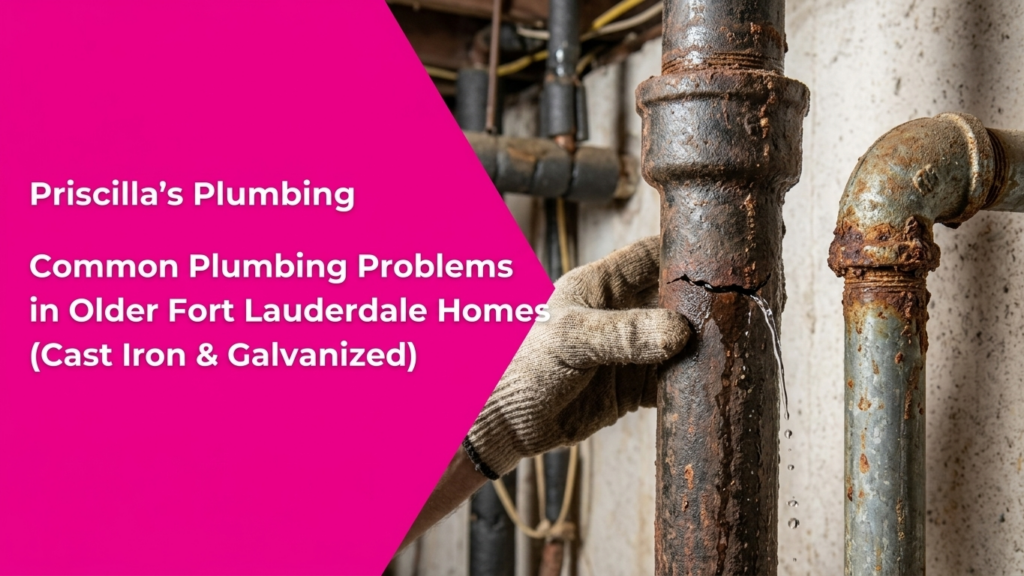
Cast iron was used for waste and sewer lines until PVC replaced it in the 1970s. In Florida soil, it corrodes from the inside out.
How cast iron fails
The bottom of the pipe, called the channel, thins first because waste water sits against it. Over time:
- Interior scaling builds up, narrowing the pipe and slowing the flow of solids.
- The pipe wall thins until pinholes and cracks form.
- Waste and water escape into the surrounding soil, which then washes away and leaves the pipe unsupported.
Signs your cast iron is failing
- Frequent or recurring drain backups
- Slow drains throughout the house, not just one fixture
- Sewage odors inside or around the property
- Warped or stained flooring, especially over slab areas
- Unexplained roach or rodent activity, which often enters through cracked sewer lines
That last sign surprises homeowners, but pests following a cracked sewer line into a home is one of the most reliable tells that a cast iron line has breached.
Galvanized Steel Supply Line Problems
Galvanized steel pipe carried the drinking water in many mid-century homes. The pipe is coated in zinc to resist rust, but that coating wears away over the decades, and the steel underneath begins to corrode.
How galvanized pipe fails
Rust builds up on the inside walls, narrowing the pipe like plaque in an artery. Flow drops, and eventually the corrosion eats through the wall or the threaded joints where sections connect, which is where galvanized pipe is weakest.
Signs your galvanized supply is failing
- Low water pressure, especially when running more than one fixture
- Brown, yellow, or rusty water, often worst first thing in the morning
- A metallic taste or staining on sinks, tubs, and laundry
- Uneven pressure from one faucet to the next
- Visible rust or corrosion on any exposed pipe
Discolored water is the classic galvanized warning sign. As the pipe rusts from the inside, iron particles break off into your water. It is not usually an immediate health emergency, but it means the pipe is thinning and could leak or burst.
Slab Leaks
Many older Fort Lauderdale homes sit on concrete slabs with water lines running underneath. When those lines corrode or shift with the soil, they leak below the foundation, where nothing is visible.
Watch for:
- A spike in your water bill with no change in usage
- A warm or damp spot on the floor
- The sound of running water when everything is off
- Cracks in the flooring or the foundation
Slab leaks are among the most expensive plumbing problems to fix because reaching the pipe means going through the slab, which is exactly why early detection matters so much. A professional water leak detection service can pinpoint the leak without breaking up the whole floor.
Sewer Line Bellying and Settling
Florida’s sandy soil does not stay put. Over the years, it has settled unevenly, and the buried sewer line has settled with it. When a section sinks below the proper downhill slope, it forms a belly, a low spot where waste pools instead of flowing through.
A bellied line causes repeat clogs that no amount of snaking fixes permanently, because the problem is the pipe’s shape, not a single blockage. Confirming a belly usually requires a camera inspection to see the standing water sitting in the line.
Tree Root Intrusion
The mature trees that make older neighborhoods beautiful also send roots toward the nearest water source, which is often a cracked sewer joint. Roots work in through tiny gaps, then mass into a net that snags everything passing through. The result is slow drains, recurring backups, and eventually a fully blocked or cracked line.
Polybutylene Pipe (the Often-Forgotten One)
Homes and additions built or re-plumbed roughly between the late 1970s and mid-1990s sometimes used polybutylene, a gray plastic pipe once marketed as the pipe of the future. It turned out to react with chlorine in the water supply, becoming brittle and failing without warning.
If your older home was updated during that era, it is worth confirming what is actually in the walls. Polybutylene is considered a defective material and most plumbers recommend full replacement, since it can fail suddenly and is difficult to insure.
Aging Water Heaters and Fixtures
Older homes often hide an aging water heater in a cramped closet or garage, struggling to meet modern demand. Combined with worn fixtures, old shutoff valves that no longer turn, and original supply lines, these add up to a system running on borrowed time. Replacing failing shutoff valves alone can save you from a minor repair turning into a flood.
Repair or Replace: How to Decide
This is the question that matters, and the SERP rarely answers it clearly. Here is the honest framework a good plumber uses.
A spot repair makes sense when:
- The failure is isolated to one accessible section
- The rest of the system was tested in good condition
- The pipe material still has years of life left
Full repiping or sewer replacement makes sense when:
- You are seeing repeat failures in different spots
- A camera inspection shows widespread corrosion or scaling
- The pipe material itself is at the end of life (old galvanized, deteriorated cast iron, or polybutylene)
- You are paying for the same clog or leak more than once a year
Patching one section of a system that is failing everywhere is throwing money at a problem that will resurface a few feet down the line. When the material is the problem, replacement is almost always the cheaper path over a few years.
A common modern fix for cast-iron sewer lines is trenchless lining, which creates a new pipe inside the existing one without digging up your whole yard or floor. For galvanized supply lines, repiping with PEX or copper restores pressure and water quality for good.
Why a Camera Inspection Comes First
Before committing to any major work, get the lines inspected with a camera. It shows the actual condition of the pipe, confirms whether you have a belly, root intrusion, or corrosion, and turns a guess into a documented diagnosis. It also protects you from paying for more work than you need.
Priscilla’s Plumbing works on older homes throughout Fort Lauderdale, Oakland Park, Wilton Manors, and the surrounding Broward area, and answers the phone 24/7 when something fails without warning.
FAQ
How do I know if my home has cast iron or galvanized pipes?
Check the construction year. Homes built before the mid-1970s in Fort Lauderdale very likely have both.
How long do cast-iron pipes last in Florida?
Around 25 to 40 years here, well short of their 50-year design life, due to humidity and acidic soil.
Is discolored water from galvanized pipes dangerous?
It is usually not an emergency, but it signals the pipe is rusting and thinning toward failure.
Can old pipes be fixed without digging up my yard?
Often yes. Trenchless lining repairs many cast-iron sewer lines without major excavation.
What is polybutylene, and why does it matter?
A defective gray plastic pipe from the 1980s to 90s that becomes brittle and should be replaced.
Should I repipe or just repair the leak?
Repair isolated failures; repipe when the pipe material itself is at the end of life or failing repeatedly.
Does homeowners’ insurance cover old pipe replacement?
Coverage varies, and many Florida insurers now ask about pipe material, so confirm with your provider.