
Most homeowners never think about their backflow preventer until something goes wrong. It sits quietly on the supply line doing one critical job: stopping dirty water from reversing direction and flowing back into your clean drinking water. When it starts to fail, the warning signs are easy to miss and even easier to dismiss, right up until contaminated water reaches your tap.
Here is how to recognize a failing backflow preventer early, why it matters more than most people realize, and exactly what to do before a small problem turns into a health hazard or an expensive repair.
What a Backflow Preventer Does (and Why Failure Is Serious)
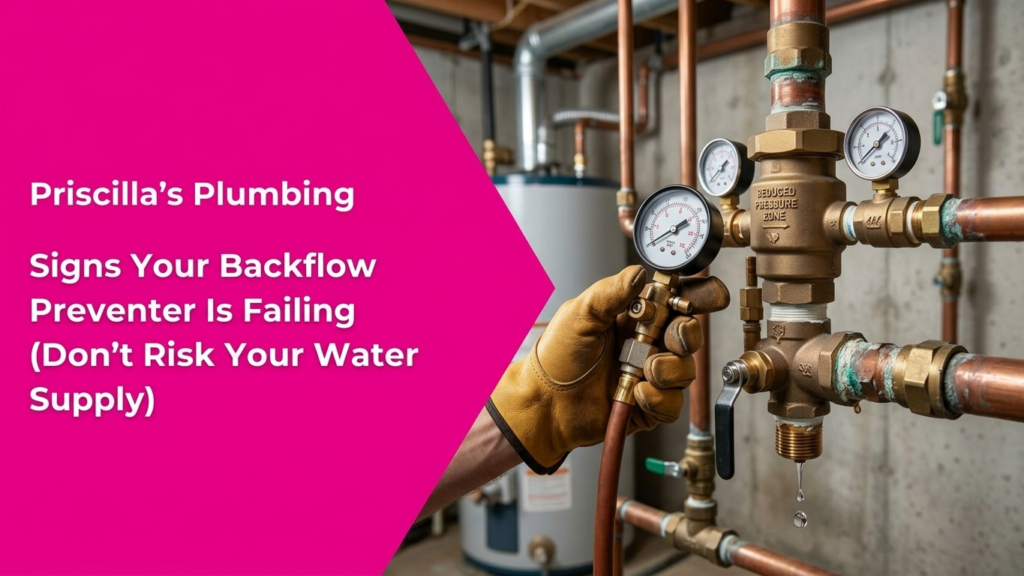
A backflow preventer is a valve assembly installed on your water line that allows water to flow in one direction only, toward your fixtures, never backward into the public supply. It guards against what plumbers call a cross-connection, where contaminated water from irrigation systems, boilers, or drains could siphon back into potable water.
Backflow happens for two reasons:
- Back-siphonage occurs when a pressure drop in the main line pulls water backward, often after a water main break or heavy demand from a fire hydrant.
- Back-pressure occurs when the pressure downstream becomes higher than the supply pressure and forces water the wrong way.
When the preventer works, neither of these reaches your drinking water. When it fails, pesticides from a sprinkler system, chemicals, or sewage can flow straight into the water your family drinks. That is why this is not a repair to put off.
7 Signs Your Backflow Preventer Is Failing
1. Visible leaks or water pooling around the device
A slow, steady drip or water collecting at the base of the assembly is the most common early sign. It usually points to cracked housing, worn seals, or a failed internal component. A backflow preventer is built to stay dry on the outside, so any persistent moisture is a red flag.
2. Discolored, cloudy, or rusty water
If your water turns brown, yellow, pink, or cloudy, or if you spot rust particles and sediment at the tap, the device may no longer be keeping contaminants out. Discoloration is one of the clearest signals that non-potable water is mixing with your clean supply.
3. Foul-smelling or bad-tasting water
A sulfur, musty, or chemical smell, or an odd metallic taste, can mean backflow is introducing contaminants. Water that suddenly tastes or smells wrong should never be ignored, especially right after a pressure event in your area.
4. Sudden drops or fluctuations in water pressure
A failing preventer often disrupts normal flow. If your pressure suddenly drops, spikes, or feels inconsistent from one fixture to the next, or faucets sputter, the valve may be stuck, blocked, or no longer regulating flow correctly.
5. Unusual noises from the plumbing
A backflow preventer normally runs silently. Hissing, gurgling, banging, or clicking sounds suggest water is moving improperly through the device, often a sign of internal valve malfunction or air entering the line.
6. Visible cracks, rust, or distortion on the housing
Inspect the body of the assembly. Cracks forming in the housing, rust accumulating on the surface, or any bulging or distortion of the device all indicate material fatigue and a compromised seal. These rarely appear alone and usually accompany one of the symptoms above.
7. A failed annual test
The most reliable sign of all is an official one. A certified backflow test measures whether the check valves and relief valve are holding properly. A failed result means the device is not protecting your water, even if you have not noticed any other symptoms yet.
What to Do If You Notice These Signs
Act quickly. A failing backflow preventer is a contamination risk, not a cosmetic issue.
- Stop using the affected system. If the problem traces to an irrigation or sprinkler setup, shut it down to limit contamination.
- Shut off the main water supply if you suspect active backflow or see clear signs of contamination at the tap.
- Do not attempt a DIY repair. These assemblies are precise, code-regulated devices. Improper repair can make the contamination risk worse and is often illegal without certification.
- Call a certified backflow technician. Only a certified tester can legally diagnose, test, repair, or replace the unit and certify it as working.
Why Annual Backflow Testing Matters
Most failures build slowly. Seals wear, debris collects, and check valves weaken over months before any symptom reaches your faucet. That is exactly why annual testing exists: to catch a failing device before it ever puts your water at risk.
In Florida, backflow testing is not optional for many properties. Local water authorities across Broward County require annual testing and certification on backflow assemblies, particularly for properties with irrigation systems, pools, commercial connections, or fire suppression lines. Skipping it can mean fines, a failed inspection, or in the worst case, a contamination event you are liable for.
Annual testing protects three things at once: your family’s health, your compliance with local code, and your wallet, since catching a worn seal early is far cheaper than replacing a cracked assembly after it fails.
Why This Matters Even More in South Florida
A few local conditions make backflow problems more likely here than in much of the country.
- Heavy irrigation use. Lawns and landscaping across Oakland Park, Fort Lauderdale, and the surrounding Broward communities run sprinkler systems year-round, and irrigation lines are a leading source of cross-connection risk.
- Humidity and salt air. The same coastal conditions that corrode pipes also accelerate corrosion and seal wear on outdoor backflow assemblies.
- Frequent pressure events. Storm season, water main work, and high seasonal demand all create the pressure swings that trigger back-siphonage.
Because so many South Florida homes combine irrigation systems with older outdoor plumbing in a corrosive coastal climate, staying current on inspection and testing is one of the simplest ways to protect your water. Priscilla’s Plumbing handles backflow prevention across South Florida and is available 24/7 if you suspect a problem.
FAQ
How long does a backflow preventer last?
With annual testing and maintenance, most assemblies last 10 to 15 years before needing replacement.
Can I test my backflow preventer myself?
No. Testing requires certified equipment and training, and most jurisdictions only accept results from a certified tester.
How often is backflow testing required in Florida?
Most Broward County water authorities require annual testing and certification, especially for irrigation and commercial connections.
Is discolored water always a backflow problem?
Not always, but it is a warning sign worth investigating quickly, since it can indicate contamination from a failing device.
What does a failed backflow test mean?
It means the valves are not sealing properly, and the device is no longer protecting your water supply from contamination.
Should I shut off my water if my backflow preventer is leaking?
If you see clear contamination signs, shut off the main supply and call a certified technician right away.
Can a failing backflow preventer make you sick?
Yes. It can allow contaminated water containing chemicals, pesticides, or sewage to enter your drinking water supply.