
You pour the bottle down a slow drain, wait fifteen minutes, run the tap, and the water finally swirls away. Problem solved, or so it seems. The truth is that the same chemicals that cleared your sink were also eating at the inside of your pipes, and in older South Florida homes, that damage adds up faster than most people realize.
Chemical drain cleaners are not harmless. They corrode pipe walls, harden the clogs they fail to clear, release dangerous fumes, and often leave the real blockage sitting right where it started. Here is exactly what happens inside your plumbing when you use it, and the safer methods that actually fix the problem.
What Chemical Drain Cleaners Actually Are
Most store-bought drain cleaners fall into three categories, and each clears a clog through a different chemical reaction.
- Caustic cleaners contain sodium hydroxide (lye) or potassium hydroxide. They release heat and turn grease into a soap-like substance that washes away.
- Oxidizing cleaners use bleach, peroxides, or nitrates. They work well on hair and organic matter in showers and bathroom sinks.
- Acidic cleaners rely on sulfuric acid or hydrochloric acid. These are the harshest, usually sold for professional use, and the most damaging to pipes.
Every one of these works by triggering a reaction violent enough to dissolve organic material. That reaction does not stop at the clog. It also reaches the pipe walls, the joints, and the seals holding your system together.
How Chemical Cleaners Damage Your Pipes
Heat warps and weakens the pipe
Caustic and acidic cleaners generate significant heat as they react with a clog. Modern homes are plumbed with PVC, and PVC was never designed to handle that kind of sustained heat. The heat softens the plastic, warps the walls, and weakens the glued joints where pipes connect. Once a joint is compromised, you get slow leaks behind walls or under the slab that nobody notices for months.
Corrosion eats metal pipes from the inside
Plenty of older Broward County homes still run on cast iron and galvanized steel. These cleaners are brutal on both. The acids and caustics strip the protective coating off cast iron, which then begins to rust from the inside out. On galvanized pipe, the chemicals eat through the threaded joints where sections screw together, and those threads are exactly where the pipe is already weakest.
The clog gets harder, not gone
This is the part the label never mentions. When a chemical cleaner cannot fully dissolve a blockage, it often hardens what is left or compresses it deeper into the line. The residue cools, sticks to the pipe wall, and creates a rough surface that catches the next round of grease and hair. You end up in a cycle: pour, partially clear, clog again, pour more. Each round corrodes the pipe a little further.
Seals and gaskets break down
Your drain system depends on rubber gaskets, O-rings, and seals at every connection point. Repeated chemical exposure dries them out and cracks them. A failed seal under a sink is a small repair. A failed seal inside a wall is drywall removal, mold remediation, and a much bigger bill.
The Health and Safety Risks People Ignore
Pipe damage is a slow problem. The first problem is what these chemicals do to people.
- Burns and eye injuries. Splash-back is common, and these chemicals can cause serious skin burns and permanent eye damage, including blindness.
- Toxic fumes. The reaction releases fumes that irritate the lungs and eyes. In a closed bathroom or under a kitchen sink, that exposure adds up quickly.
- Dangerous mixing. Leftover cleaner sitting in a trap can react with the next product you pour, including another drain cleaner or bleach, and produce toxic gas.
- Risk to kids and pets. Bottles stored under sinks are exactly where small children and animals can reach them.
If a chemical cleaner does not work on the first try, pouring in more only raises every one of these risks. At that point, the clog needs a physical solution, not a stronger chemical one.
Why They Often Do Not Even Work
Chemical cleaners are marginally useful on small, soft clogs close to the drain opening, things like a hair knot in a shower or light soap scum. They are nearly useless on the clogs that actually send people searching for help:
- Hardened grease deep in the line
- Tree roots growing into the sewer line
- Solid objects like wipes, toys, or food waste
- A collapsed or bellied section of pipe
In every one of those cases, the chemical sits on top of the blockage, does nothing useful, and quietly corrodes the surrounding pipe while you wait.
What to Use Instead
The safer methods all share one principle: physically remove or break down the clog without attacking the pipe.
For minor, slow drains:
- Hot water and dish soap. Squirt dish soap into the drain, then pour a gallon of hot (not boiling) water. Boiling water can damage PVC and joints, so keep it hot from the tap, not the kettle.
- Baking soda and vinegar. Pour half a cup of baking soda, then half a cup of vinegar. Let it sit for an hour, then flush with hot water. It will not destroy a serious clog, but it clears light buildup without harming the pipe.
- A plunger. A good plunge often dislodges a soft clog in minutes.
For tougher or recurring clogs:
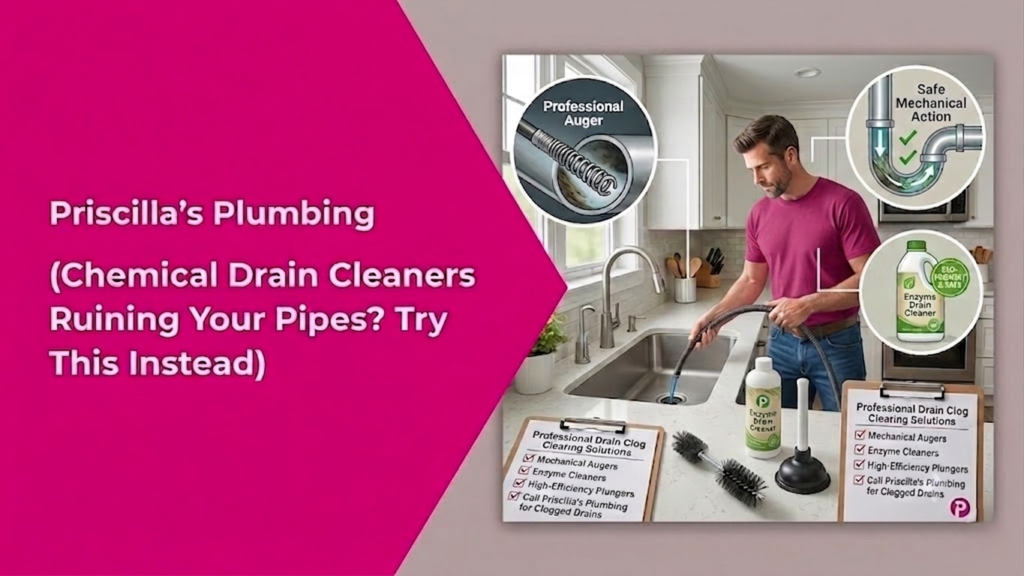
- A hand auger or drain snake. This physically grabs and pulls the clog out instead of leaving residue behind. It is the single most effective DIY tool for a stubborn blockage.
- Enzyme-based cleaners. These use natural bacteria and enzymes to slowly break down organic matter. They are gentle on pipes and septic systems and excellent for monthly maintenance, though they are not built for emergencies or heavy clogs.
For anything that keeps coming back:
A recurring clog is a symptom, not the disease. It usually means grease has built up deep in the line, roots have invaded the sewer pipe, or a section of pipe is damaged. That is when professional drain cleaning earns its cost. A licensed plumber can run a camera to find the real cause and clear it with a snake or hydro jetting, no corrosive chemicals involved.
Why This Matters More in South Florida
The age of the housing stock here changes the math. Many homes around Oakland Park, Fort Lauderdale, and the surrounding Broward communities were built decades ago and still carry their original cast iron or galvanized lines. Those pipes are already corroding from years of humidity, hard water, and salt air. Pouring caustic chemicals into a pipe that is already thinning is how a slow drain becomes a leak under the slab, and slab repairs are among the most expensive plumbing jobs a homeowner can face.
If your drains are clogging often, the smarter move is to find out why before the pipe fails, not to keep buying time with a bottle that corrodes it further.
When to Call a Plumber
Skip the chemicals and call a professional when you notice:
- The same drain clogging again and again
- More than one fixture draining slowly at the same time
- Gurgling sounds or sewage odors from the drains
- Water backing up into a tub or shower when you flush
- A clog that returns within days of being cleared
These point to a deeper problem in the main line that no store-bought product can fix. Priscilla’s Plumbing handles residential and commercial drain cleaning across South Florida and answers the phone 24/7, so a backed-up drain never has to wait until morning.
FAQ
Are chemical drain cleaners bad for all types of pipes?
Yes, though the damage varies by material. Caustic and acidic cleaners corrode metal pipes like cast iron and galvanized steel, stripping protective coatings and weakening threaded joints. On PVC, the heat from the chemical reaction can warp and soften the plastic and degrade glued joints. Older homes with metal piping are at the highest risk, but even modern PVC systems suffer from repeated use.
Is it safe to use chemical drain cleaners occasionally?
A single use on a minor clog is unlikely to destroy your plumbing, but there is no truly safe routine. The damage from these products is cumulative and often does not show up for months or years, which makes it hard to trace back to the cause. Because safer methods like a drain snake or enzyme cleaner work just as well on minor clogs without the risk, there is little reason to reach for the chemical option at all.
Why does my drain keep clogging even after using a drain cleaner?
Chemical cleaners rarely remove a clog completely. They break it down just enough for some water to pass, leaving residue that hardens on the pipe wall and catches the next round of debris. Recurring clogs usually signal a deeper issue, such as grease buildup, tree root intrusion, or a damaged pipe, none of which a chemical cleaner can fix. A camera inspection is the reliable way to find the real cause.
What is the safest way to unclog a drain at home?
For light clogs, start with a plunger, hot water and dish soap, or baking soda and vinegar, followed by a hot water flush. For tougher blockages, a hand auger or drain snake physically removes the clog without harming the pipe. Enzyme-based cleaners are a good gentle option for ongoing maintenance. Avoid boiling water on PVC, and avoid chemical cleaners entirely.
Can chemical drain cleaners cause a leak?
They can. By corroding metal pipes, degrading seals and gaskets, and warping PVC joints, repeated chemical use weakens the points where pipes are most likely to fail. In South Florida homes with aging cast iron under concrete slabs, this can lead to hidden leaks that cause significant and costly water damage before they are ever detected.
Are enzyme drain cleaners as effective as chemical ones?
For heavy or emergency clogs, no, enzyme cleaners work too slowly. But for routine maintenance, they are often the better choice. They use natural bacteria to break down organic material gradually, they are safe for pipes and septic systems, and when used monthly, they help prevent buildup so you avoid serious clogs in the first place