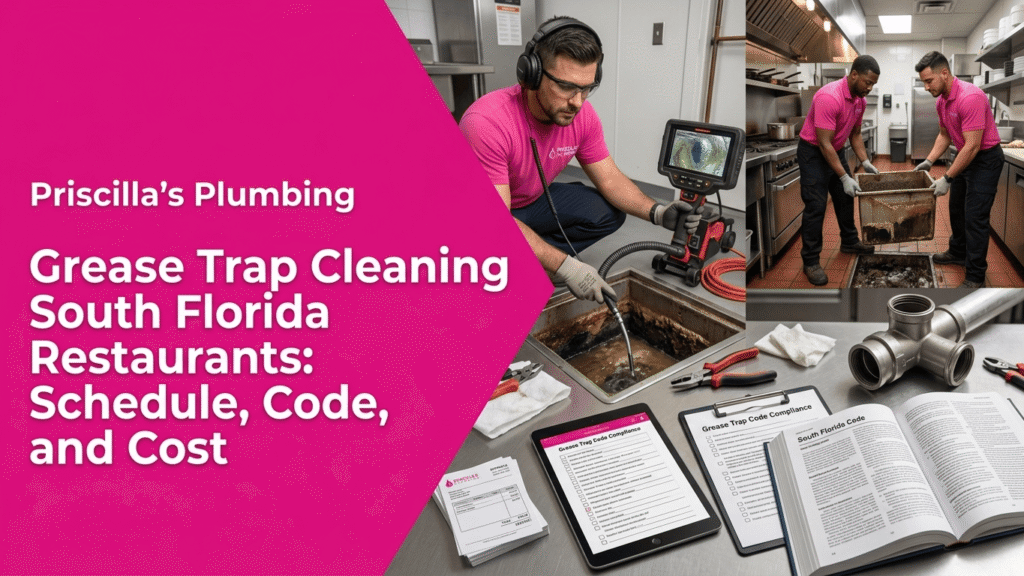
A busy restaurant has little room for a slow drain, bad smell, or kitchen backup. Grease, food waste, and wash water move through the kitchen every day. Over time, fats, oils, and grease, also called FOG, build up inside the grease trap and drain system. A small plumbing issue then grows into a kitchen problem.
For South Florida restaurant owners, grease trap cleaning also ties into local code duties. Your trap needs regular service. Your records need to stay organized. Your cleaning plan needs to match your kitchen use. Cost also changes based on the type and size of your grease trap or interceptor.
Let us help you uncover the main points you need to know, including cleaning frequency, the 25% FOG rule, records, code requirements, cost factors, and drain care.
How Often South Florida Restaurants Need Grease Trap Cleaning
The frequency to call commercial plumbing solutions across Florida depends entirely on how much fat, oil, and grease your kitchen produces every day. Here is how it goes.
Standard Kitchens
A typical restaurant with a small or medium-sized trap needs service every 30 to 90 days. Your exact interval depends on your menu, your customer volume, and how fast waste builds up inside the unit.
High Volume Kitchens
Busy kitchens running fryers, grills, or heavy seafood prep push far more grease into the system every single day. These operations need service every two to four weeks to stay ahead of buildup and avoid a surprise backup during peak hours.
Under-Sink Traps
Smaller indoor units, often tucked under a prep sink, fill up faster than their size suggests. These traps typically need clearing every 7 to 14 days, especially in a kitchen with limited outdoor interceptor capacity.
What Does the 25% FOG Rule Mean
The 25% rule gives restaurant owners a simple way to judge when a grease control unit needs service. When grease and solids reach one-quarter of the liquid depth, the unit needs pumping or cleaning.
Miami-Dade County defines a FOG capacity limit using 25% of the design hydraulic depth for a FOG control device. Local permits and FOG programs also set duties for food businesses.
For your restaurant kitchen drain lines, the key point is simple. Do not wait until the trap looks full.
Your kitchen habits also matter. Scrape food from plates and pans before washing them. Keep fryer oil out of sinks. Keep solid food waste out of your kitchen drain lines. These steps reduce the grease load entering your plumbing.
Florida Grease Trap Codes You Must Follow
Grease trap rules in South Florida come from multiple layers of government, and each layer enforces its own piece of the requirement.
Record Keeping and Health Inspection Violation Risk
Restaurants must keep waste manifests and cleaning logs on site at all times. Health inspectors check these records during routine visits, and a missing or incomplete log creates a health inspection grease violation even if the trap itself sits clean. Arranging compliant pumping through a licensed provider protects you on both fronts: the physical trap and the paperwork trail behind it.
State Plumbing Code
Florida Building Code Chapter 10, Section 1003.13 requires every food establishment to maintain its grease interceptor through periodic waste removal. This rule applies statewide, and it forms the legal floor every county builds on top of.
FOG Compliance in County
Broward County enforces strict FOG compliance standards on top of the state code, and Miami-Dade follows a similar path through its DERM department. FOG compliance Broward inspectors check for proper trap sizing, cleaning frequency, and disposal method, not just whether your trap exists.
How Much Does Grease Trap Cleanup Cost?
Grease trap cleanup does not have one fixed price for every South Florida restaurant. The final cost depends on the size of the unit, the amount of buildup, access, pumping needs, and waste handling.
Indoor Traps
Small under-sink units cost less to service, since a technician handles them through manual or basic pumping methods without heavy equipment or long service windows.
Outdoor Interceptors
Large underground gravity interceptor pumping frequency, ranging from 1,000 to 5,000 gallons, costs significantly more. Heavy pumping equipment, waste transport, and proper disposal fees all add to the final bill, especially for high-volume kitchens running larger interceptors.
Protecting Your Restaurant Kitchen Lines Between Cleanings
A clean grease trap only solves half the problem. Your restaurant drain line still carries grease residue every single service, and buildup along the pipe walls slowly narrows the line between scheduled pumpings. Left alone, this buildup leads to slow drains, backups, and emergency calls during your busiest hours. A deeper cleaning method clears this residue far more effectively than a standard snake, and this comparison of hydro jetting versus snaking explains which method actually protects your kitchen drain line for good.
Keep Your Kitchen Running and Your Inspections Clean
Grease trap compliance touches your health inspection score, your insurance standing, and your ability to stay open on a busy Friday night. Meanwhile, a missed grease trap cleaning turns into a slow drain, then a backup, then a citation you never saw coming.
At Priscilla’s Plumbing, we keep South Florida restaurants ahead of every deadline, with flat-rate pricing, licensed technicians, and a full record trail ready for your next health inspection. From grease trap pumping to full kitchen drain line maintenance, one call covers the whole job, so your team stays focused on the kitchen, not the paperwork.
Schedule your grease trap and drain cleaning service with Priscilla’s Plumbing today and keep your restaurant running clean, compliant, and open.
Frequently Asked Questions
How do I know if my grease trap needs cleaning right now?
Check the grease and solid layer against the 25% rule. Once that layer reaches one quarter of your trap’s liquid depth, state and local code require pumping regardless of your last cleaning date.
What happens if a health inspector finds an overdue grease trap?
An overdue trap or missing cleaning log can trigger a health inspection grease violation, fines, and, in serious cases, a temporary closure until your kitchen comes back into compliance.
Do small restaurants need the same grease trap schedule as large kitchens?
No. Standard kitchens often clean every 30 to 90 days, while high-volume kitchens with fryers and grills need service every two to four weeks to keep pace with grease output.
Can I clean my own grease trap to save money?
Basic maintenance helps between visits, but Florida code requires proper waste manifests and licensed disposal, which means a professional service protects your compliance record far better than a DIY approach.