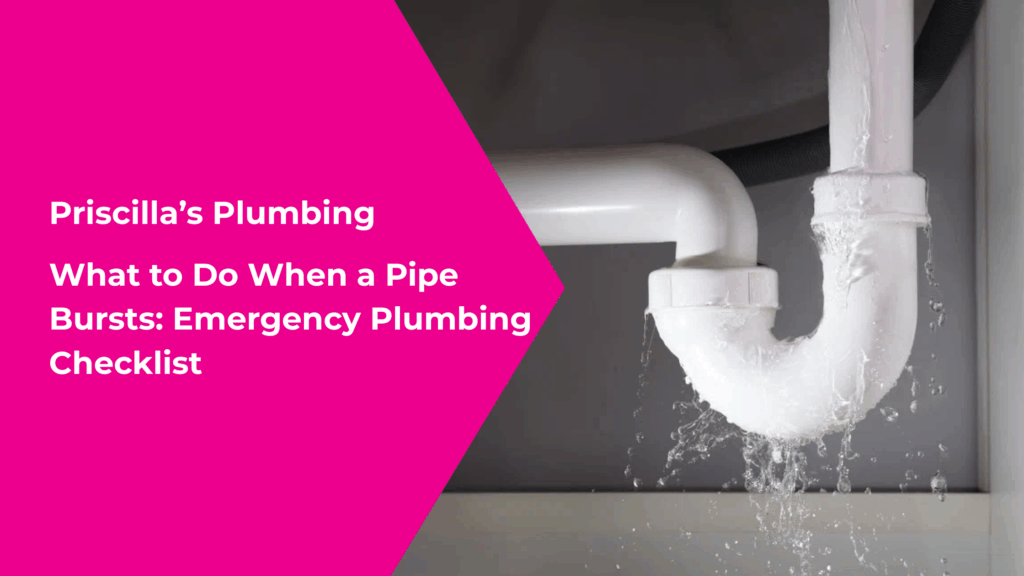
A burst pipe is one of the most devastating plumbing emergencies any homeowner can face. Water can gush out at high pressure, quickly flooding your home, damaging floors, walls, ceilings, and personal belongings. Acting FAST and knowing what to do when a pipe bursts can significantly reduce damage and the cost of repairs.
In this comprehensive emergency plumbing checklist, we’ll walk you through practical steps from immediate safety actions to long‑term solutions, so you’re prepared before, during, and after a burst pipe crisis.
Why Burst Pipes Happen?
Burst pipes can occur for many reasons, including freezing temperatures, corrosion, excessive water pressure, shifting soil, and aging plumbing systems. Understanding the cause helps you take preventive measures.
Common causes include:
- Frozen water expanding inside pipes
- Corroded metal pipes giving way
- High water pressure stressing joints
- Tree roots shifting underground pipes
Being aware of these will help you identify warning signs early.
Immediate Steps: What to Do First
When a pipe bursts, seconds matter. Follow this emergency plumbing checklist precisely:
1. Shut Off the Main Water Supply
The very first step is to stop water at the source. Locate your main shut‑off valve, usually near the water meter, basement, or outside the home, and turn it clockwise to stop the water flow.
If you live in an apartment or condo, contact building management immediately if you can’t access the valve.
Pro tip: Know the location of your shut‑off valve before an emergency happens.
2. Turn Off the Electricity (If Needed)
Water and electricity are a dangerous mix. If flooding has reached outlets, appliances, or breaker panels, shut off the electrical power to affected areas until the water recedes.
This protects you and prevents electrical hazards like shocks and short circuits.
3. Contain the Leak and Reduce Damage
While waiting for help, take simple steps to contain water:
- Place buckets or bowls under leaking areas
- Use towels and mops to soak up standing water
- Move furniture, electronics, and valuables to dry areas
Even small actions at this stage can prevent big losses.
4. Document Everything for Insurance
Before cleanup begins, take clear photos and videos of:
- The damaged pipe.
- Affected areas (walls, floors, ceilings).
- Damaged belongings.
This documentation will support your homeowner’s insurance claim. In many cases, water damage from a burst pipe is covered if the break was sudden and accidental.
Emergency Plumbing: Short‑Term Fixes While You Wait
While temporary fixes are not permanent solutions, they can reduce the severity of damage until a professional arrives.
Temporary Seal Fixes
If the burst area is accessible:
- Use pipe repair tape or Teflon plumber’s tape to wrap the leak
- Apply a rubber patch or a garden hose piece over the crack
- Secure with clamps or heavy‑duty tape
These measures can slow the leak, but should NOT replace professional repair.
Open Taps to Relieve Pressure
Once the main water supply is off, open cold water faucets and flush toilets. This drains remaining water and relieves pressure in the lines.
Pressure relief reduces the chances of leaks continuing through other weak spots.
Safety Checklist During a Burst Pipe Emergency
Your safety and that of your family comes first. Follow these precautions:
- Don’t walk in standing water near electrical outlets
- Wear protective gloves and boots
- Keep children and pets away from the flooded area
- Don’t try to cut or solder pipes unless you are trained
These simple steps prevent injuries during the chaos of a plumbing emergency.
How to Spot a Burst Pipe Fast?
Sometimes you don’t see a pipe burst immediately. Look for these warning signs first:
Signs of a Burst Pipe
| Warning Sign | What It Means |
| Water stains on walls or ceilings | Indicates slow leaks or hidden bursts |
| Sudden drop in water pressure | Pipe break reduces overall flow |
| Strange sounds (hissing, gurgling) | Water escaping under pressure |
| Wet spots or mold growth | Leak seeping into surfaces |
| Puddles appearing with no clear source | Likely an unseen break |
Identifying a burst pipe early can minimize flooding and structural damage.
When to Call an Emergency Plumber?
A burst pipe is not a DIY repair situation. You need trained professionals. As soon as the immediate actions are taken, contacting a licensed emergency plumber is essential.
Call an emergency plumber if:
- Water is gushing rapidly
- You cannot control the leak
- Electrical hazards are present
- Damage is spreading quickly
Plumbers offering emergency plumbing services can respond 24/7 and have specialized tools to repair or replace broken pipes without causing further issues.
Detailed Emergency Plumbing Actions (Step by Step)
Here’s your structured emergency checklist that homeowners can follow:
Step 1: Turn Off Water and Electricity
Find the main shut‑off and electrical panel.
Step 2: Open Drains and Faucets
Draining lines reduces pressure and ongoing leakage.
Step 3: Contain the Water
Buckets, towels, and shop vacs help minimize soggy damage.
Step 4: Temporary Repairs
Wrap tape or rubber patches until help arrives.
Step 5: Document Everything
Pictures and videos help with insurance and repair planning.
Step 6: Wait for Professional Plumbing Help
Don’t turn the water back on until advised by a professional. These six steps give you structured control during chaos.
Common Emergency Plumbing Scenarios
Different emergencies require slightly different responses. Here’s how to handle them:
Burst Pipes
- Act fast, shut off the water immediately.
- Protect valuables and electrical fixtures.
- Call emergency plumbing professionals.
Leaking Pipes Behind Walls
Sometimes you’ll notice damp walls or ceilings, these require specialized leak detection tools and professional repair before a full burst occurs.
Overflowing Fixtures
Overflowing toilets or sinks with severe backups can also indicate a larger pipe issue. Do not use chemical drain cleaners during an emergency, they can worsen the situation.
Prevent Future Burst Pipes
Once the emergency is resolved, take preventive steps:
- Insulate exposed pipes.
- Maintain a consistent household temperature.
- Check older pipes regularly.
- Have routine plumbing inspections.
Prevention reduces the risk of future emergencies and costly repairs.
Regional Emergency Plumbing Resources
If you want to understand other common emergency plumbing situations and how to handle them locally, check out our guide on plumbing emergencies in Pompano Beach. This resource dives into real examples and expert tips for homeowners facing urgent plumbing issues.
Conclusion
A burst pipe is scary, but if you follow this emergency plumbing checklist, you can limit damage, protect your home, and reduce stress.
Above all, never underestimate the importance of professional help. Emergency plumbing isn’t something to improvise, it requires trained technicians with the tools and experience to fix the problem right the first time.
When you need trusted emergency plumbing assistance you can count on, turn to Priscilla’s Plumbing. Our expert team is ready to help you handle burst pipes and any plumbing crisis quickly, skillfully, and with care.
Frequently Asked Questions (FAQs)
1. What should I do first if a pipe bursts?
Immediately shut off your main water supply to stop water flow and protect your home from flooding. Then turn off the electricity and contain the leak.
2. Can I fix a burst pipe myself temporarily?
You can apply temporary fixes like plumber’s tape or a rubber patch, but these are short‑term solutions. A professional repair is necessary.
3. Does homeowner’s insurance cover damage from burst pipes?
Many policies cover sudden and accidental water damage, but may exclude gradual leaks from lack of maintenance.
4. How quickly should I call an emergency plumber?
As soon as you have stopped the water and taken safety steps, call a licensed emergency plumbing professional. Waiting can worsen damage.
5. What tools should I keep for plumbing emergencies?
Essential tools include buckets, towels, wet/dry vacuum, pipe repair tape, clamps, and a shut‑off valve key. These help you manage the situation before help arrives.