
Your insurance agent asks one strange question during your renewal call: what type of pipe runs through your home? You pause, unsure how to answer. That single question decides whether your policy renews, gets non-renewed, or costs far more than last year, and the answer often comes down to one material: polybutylene pipes in Florida homes.
Insurance companies in Florida routinely drop coverage for homes with polybutylene pipes. Thousands of houses across South Florida contain these plumbing systems. Finding polybutylene pipes inside your walls often triggers an immediate policy cancellation or non-renewal notice.
Insurers treat polybutylene as an unacceptable property hazard. The material breaks down silently and fails without warning. But why exactly? Let’s understand it together!
What Are Polybutylene Pipes?
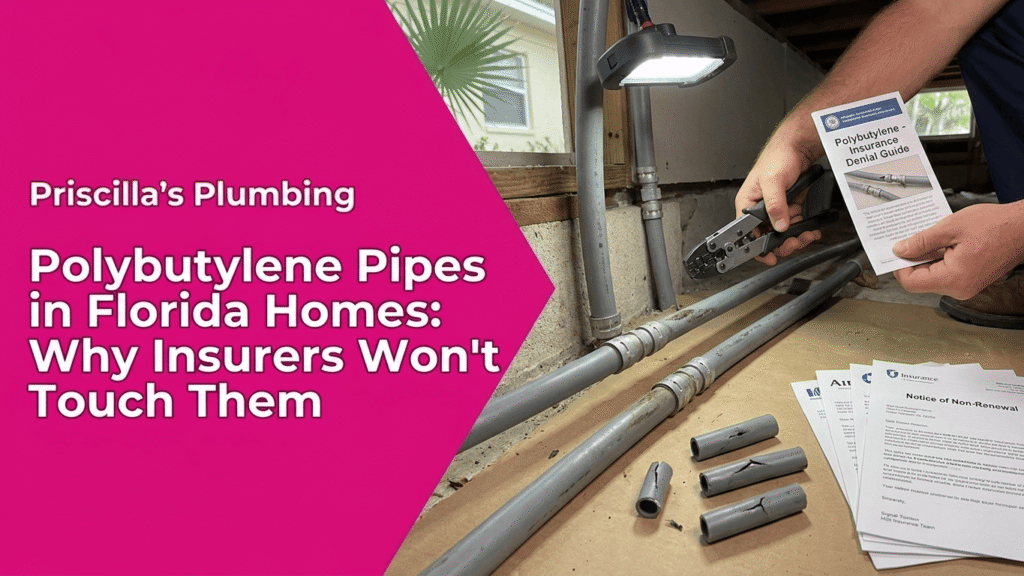
Polybutylene is a flexible grey plastic water pipe. Builders installed these pipes widely in American homes between 1978 and 1995. Plumbers used them as a low-cost option to replace rigid copper lines.
Over ten million homes received these grey plastic water pipes across the country. Florida residential subdivisions built during this period frequently contain these supply systems.
How to Identify Polybutylene Lines in Your Home
You can check three specific areas in your home to spot polybutylene without opening drywall.
- Check the water pipes near your water heater. Polybutylene lines measure one-half inch to one inch in width.
- Look under your bathroom and kitchen sinks. Check the flexible tubes exiting your wall behind the supply valves.
- Inspect the main water line connection near your exterior shutoff valve or water meter.
Polybutylene lines usually show a dull grey color. The plastic tubing often bears the code stamp PB2110 printed along its outer wall.
Blue or black versions of this flexible plastic tubing also exist in rare cases. Rigid white or cream colored pipes indicate CPVC material, which insurers accept. Bright red or blue flexible lines indicate modern PEX plumbing.
Why Insurers Deny Coverage on Polybutylene Pipes in Florida
Even though polybutylene pipes are common in 1978-1995 home plumbing systems. Now most insurance companies across Florida treat polybutylene as one of the highest-risk materials a home can carry, and four clear reasons drive this strict stance.
Invisible Inside Out Decay
Water treatment chemicals react with polybutylene plastic over years of exposure. Chlorine and other oxidants in city water slowly make the pipe walls and fittings brittle from the inside, while the outside surface often looks completely normal. A homeowner sees no warning sign until the pipe fails.
A History of Major Payouts
Widespread failures across 1978 to 1995 home plumbing systems cost insurance companies enormous sums in past claims. Carriers learned from this pattern, and now most companies avoid the material entirely rather than risk a repeat of those payouts.
Catastrophic Failure Risk
Most poly-B pipe failures rarely happen as a small drip. Failures strike suddenly and violently, often behind a wall or under a slab, releasing large amounts of water before anyone notices the problem. This sudden, hidden failure pattern causes far more damage than a typical pipe leak.
Strict Underwriting Rules
State-backed carriers like Citizens Property Insurance Corporation, along with most private market insurers, flag polybutylene pipe during every 4-point inspection. Once flagged, insurers commonly decline new policies or choose not to renew existing ones, leaving homeowners scrambling for coverage.
How to Resolve a Polybutylene Problem
A clear path exists to fix this issue and restore your insurance options, though the fix requires full commitment, not a partial patch.
Full Whole House Repipe
Insurance companies generally reject a partial repair on polybutylene systems. Carriers require a complete replacement of every polybutylene line in your home, upgraded to a modern material like PEX or copper. A partial fix leaves the remaining old pipe just as likely to fail, so insurers treat any partial repair as no real fix at all.
Permitted and Inspected Work
Keep every permit and every piece of documentation from your licensed contractor once your repipe finishes. Your insurance underwriter requires proof that a licensed professional completed the full replacement to code, not just a receipt showing money changed hands.
What Is the Cost Of Polybutylene Replacement
An average polybutylene replacement cost varies based on your home size, pipe access, and the material you choose for the new system. PEX piping generally costs less than copper, while copper offers a longer service life in exchange for a higher price. Every South Florida home differs, since older construction sometimes hides pipe runs behind finished walls, ceilings, and slabs, which changes labor time and total cost.
Request a full home inspection and a written quote before you commit, so you know your exact number before work begins, not after.
Protect Your Coverage Before Your Next Renewal
A problem of polybutylene pipes in Florida homes grows more urgent every renewal season, and waiting only narrows your options as more carriers tighten their rules around this material. Here you need a trustworthy partner who can understand your situation and fix it effectively.
At Priscilla’s Plumbing, our licensed repipe services handle your full replacement with proper permits, clean documentation, and the exact paperwork your insurance underwriter needs to see. We serve all over South Florida, and we know the older homes across this region better than most, since our family has worked inside them for decades.
Call today to fix common plumbing problems in older Fort Lauderdale homes, and take the uncertainty out of your next insurance renewal now.
FAQ
Why won’t insurance companies cover polybutylene pipes in Florida?
Insurers view polybutylene decay as certain over time, not a possible risk, since the material breaks down from chlorine exposure regardless of home maintenance.
Can I get insurance if my home still has polybutylene pipes?
Some carriers decline coverage outright, while others charge a much higher premium or require a full repipe before they issue or renew a policy.
Is a partial pipe replacement enough to satisfy my insurance company?
No, insurers generally require a full whole house repipe, since a partial fix leaves the remaining polybutylene sections just as likely to fail.
How do I know if my home has polybutylene pipes?
Check your construction date first, since this material appears mainly in homes built between 1978 and 1995, then ask a licensed plumber to confirm the pipe material during an inspection.